With our next local tournament just around the corner I started to think which faction I should play. I think that competitive list construction should be strictly connected with missions, but I think I want to do something a bit different this time. Instead of specific battleplans lets look at the missions from higher level and generalize a bit. Let’s look at kill missions. In general, most kill missions have a problem that the team with bigger guy wins. As destruction has access to the biggest guys, I think it’s logical to start here. On the other hand, including titans must lead to lower number of fighters and as generally objective missions are won by numbers advantage it leads to a situation when you must make a compromise between the quantity in form of numbers and the quality in form of big guys (I start to think that having this compromise is the most important aspect of keeping any form of balance in the game). At this point we are only considering the number of fighters and their profiles/cost, but hopefully we can cheat a bit here with abilities. Firstly, we can try to avoid spending some of our precious 1000 points on mobility of our biggest guys if they have a mobility enhancing ability, so if possible, let’s try to do it. Secondly it would be great if we could do something similar with our numbers and there are only 2 ways of doing that and luckily one of them is available for Ironjawz – You messin’
(2nd is a new double available for all CoS Dispossed, which presents SCE with dwarven support exciting perspective of reaching double digit number of bodies on objectives for the first time, but let’s not get sidetracked). As we want Destruction titans(basically Ogre fighters) that can be allied in to any faction and access to You messin’ that also can be allied in let’s consider our options. We can either go with Ironjawz/Ogres to save at least one ally slot, or go with other faction if it has access to better chaff. As our “numbers trick” require 15+ wounds the choice of chaff we will use is limited to 3 orc factions and I believe Ardboyz are head and shoulders above competition here. This process leads to Ironjawz, so let’s start brewing with them.
Paragraphs above already prepared a template of a list: 1-2 big Ogres that will dominate in kill missions and as much other bodies (ardboyz) as possible with access to You messin’ (some brute). The cost of fighters we can chose from naturally leads to the list below:
As 6 bodies is an extremely low number, Gutlord’s 3 attacks are very unreliable and we have 10 unspent points, lets refine the list a bit. As our Titans will be individual operators we want a bit more predictable damage than 3 swingy attacks and as we want to increase our numbers let’s switch to Crushers as our titans of choice.
7 bodies is a minimum amount that I’m comfortable with, but there are still some aspects that can be refined. We want 2 titans for redundancy and any form of “net resistance”, but on the other hand we would like similar redundancy with You messin’ and 7 is still a very low number. I was thinking on the next step for a long time and the solution (that is obvious in hindsight) came to me in form of simple math: 245 = 175 + 70. One of the Ogors can be scaled down to second Brute and it leaves ally slot open for a brewgit. This simple change fixes all of the problems, as we receive additional body and all of our big guys damage potential can be elevated even further with Brewgit double.
With one change we received spare source of You messin’ and increased both our big guys and our numbers. The final version of the list:
I think the main concept behind the list is cheating with abilities – you can have a cake and eat it too on few fronts. I already mentioned that with big guys + brewgit double we have the biggest guys and with 8 bodies and fast kills/you messin’ we can quickly gain numbers advantage. The mobility cheat I mentioned in the beginning is gained thanks to the combination of 3 abilities below.
Despite the fact that I really like this list, I already won a tournament with similar list (I had Gutlord and 140 point brute instead of Crusher and 175 point brute, so if you want S6 on your Ogre you can consider my “old” list) and I won’t paint my dwarves in time I’m still not sure which faction to bring to the tournament as I didn’t terrorize people with my Grave Guards for quite some time and my last 4 tournaments were all order and destruction, so I don’t know.
As always thanks for sticking to the end, I hope you like this shorter form, bye.
End of the year is approaching fast and as there will most likely be only one tournament left in my city I decided that it’s time to celebrate the year of the dwarf and give the short, beerloving folks a chance. Additionally I found lovely 3d prints of dwarfen ladies, which might actually be a bigger reason, for my decision to run dwarfs, duardin, disposessed or however they are currently called by GW. I was figuring the list for quite some time and when I finally decided on my list for the next tournament (which will use Mark of Chaos battlepack available HERE) on the next day the french leak happened (if you never heard about it I suggest to check the actual pdf HERE or check out last SaltySea video, where he does great job summarizing and commenting most of the changes). Obviously all my prep went through the window, but as I already had my lovely dwarven ladies ordered I decided that nerfing all my fighters and invalidating my strategy isn’t a showstopper, but a challenge and my short beauties will still kick ass on the tournament (if they do well enough in my “rigorous” pre-tournament playtesting that usually consist of 2-5 games). I will describe my listbuilding process chronologically so if you are interested in list that is using updated profiles jump to the post-update section.
Core of the list
I believe that writing CoS list require answering 3 questions in the order below:
What is my chaff of choice (Hammerer/Ironbreaker/Longbeard)?
Which City I will play (and if it’s not Tempest Eye, why it’s not TE)?
Which allies will supplement my choices/cover my weaknesses best?
Chaff of choice
CoS dwarfs caught my attention after I was looking for spammable chaff options that are not afraid of Gutlord. What I mean by “not afraid” is that there is significant chance (over 50%) of not getting “oneshotted” by single Gutlord attack action (3A 6S 5/10, we don’t do blessings here). Because of this I dropped the T4 options and as with Strength characteristic of 3 they will most likely hit everything on 5+ decided that 50% higher DPA (Longbeard DPA4 = 3 and Ironbreaker DPA4 = 2, if this looks like black magic for you I suggest consulting Warcry Dictionary) is worth the extra 5 points and went with Longbeard with shield.
At this point some of you will be a bit confused how the profile above will more often than not survive Gutlord attack. I had few ideas – first is the double that all CoS heros have that improves the Toughness of nearby fighters with Bulwark runemark by 1.
Other idea would be to use the Hammerhal reaction – Martial Discipline
With either of this the chance of surviving the scary ogre attack jumps to 66%, with both its 79,6%. I think the tankiness of this dwarfs is more than impressive, so we have the chaff option selected.
City selection
I already mentioned Hammerhal reaction and a Shieldwall ability, let’s see what else is there in this city arsenal
This might not be the strongest ability in the game, but it significantly improves chances to win fights around objectives. The reaction is why we take this city and as it lacks big abilities that you can build around lets look for them in other factions.
Allies
I’m not an expert as far as this grand alliance is concerned, but I think most players would agree that one of the strongest abilities in the whole Order is Fight for profit.
As we lack damage with longbeard spam let’s go with 2 Arkonaut Admirals, so KO allies not only provide Fight for Profit for our Longbeards, but also have significant damage themselves.
With the decisions above we are left with just enough points to take the most expensive CoS Dwarf hero – Warden King, so let’s go this route.
After combining everything the final list looks like this:
First version of Dwarf list:
Hammerhal (11 fighters)
1x Warden King
2x Arkonaut Admiral
8x Longbeard
In the beginning I suggested that choosing non Tempest Eye city require answering the question “Wouldn’t Tempest Eye work better here?” and looking at movement 3 on all of the fighters with no movement buffing abilities I’m afraid that the answer is that sadly Tempest Eye seem like a better idea if I want to get anywhere with my fighters, especially as it also has access to Toughness boosting double. In the meantime I played Daughters of Khaine warband where I used Fight for Profit ally for the first time and I wasn’t that impressed. The bubble seemed very small and with only 3” of movement it was never where I wanted it. The other problems were that Haammmerhal reaction was basically useless against low strength attacks and that Toughness bubble was very small. Back to the drawing board then, this time we need some movement buff, more practical reaction while still keeping the defensive approach. In the meantime, I was asked for a list feedback by a friend from Norway. He was working on a very similar list – Tempest Eye longbeard spam supported by Saurus and Runelord. I thought that the idea of combining Runelord double with Tearing Bite was great and very innovative.
Most importantly it reminded me that the only Saurus I have in my collection has a friend that would complement the list I’m working on – Kixi-Taka and his Imbue with Azyrite Energy ability
I think this ability is a perfect fit for a warband I was working on. 9” range mean that the buff can cover huge part of the board unlike the 3” Toughness bubble from CoS and it fixed some mobility problems connected with not running Tempest Eye. I also decided that the idea of combining Runesmith with Saurus would be a nice plan B that the list could do when killing something big would be required. The fact that Hammerhal reaction wasn’t universal enough and didn’t help in chaff v chaff combat led to decision to switch to Phoenicia, as it has both – easier to use offensive double (bonus attack if you lost a fighter that turn), that synergizes well with Runelord Forgefire ability and a reaction that can help win “wet noodle fights” with other chaff even if opponent will roll few sixes.
Lastly previous list had a big problem – no way to abuse rolling quad. I believe every list must have a plan on how to make a big impact in the game in case of rolling a quad and Phoenicium quad might be a defensive gamewinning play in some treasure/kill missions.
Second version of the list looked like this:
Phoenicium (11 fighters)
1x Runelord
1x Kixi-Taka, the Diviner
1x Saurus Knight Alpha
8x Longbeard with Shield
For a moment I was quite happy with the list, but as the process went against the “don’t play the game, play the map” rule, I started to think about how the list would work in the context of the battlepack that will be used during tournament. I decided that Saurus Knight isn’t the best investment if I want to use Kixi-Taka triple instead of Tearing Bite often and someone who can work great without abilities or with only a double would be a better choice. When looking for an alternative I thought that a good net might be much better than powerful defense in Proving Grounds mission so I decided to change Saurus Knight to a Medusa to have her powerful net ability as a great tool for Proving Grounds and as better “individual operator”.
Last iteration of the list was ready. I finally was sure that it’s good enough to win tournament so I ordered the minis…
Final version:
Phoenicium (10 fighters)
1x Old Guard
1x Kixi-Taka
1x Bloodwrack Medusa
7x Longbeard with Shield
… and on the next day the “French leak” happened, but with the dwarf ladies already purchased I decided to continue brewing. I know that there might be changes to the leaked profiles and most probably other changes will join the CoS refresh (maybe Seraphon or Ironjawz, as they received some new models), but let’s celebrate the year of the dwarf and try to predict how the competitive dwarf lists will look after the change.
Future Dwarfs (not Squats!)
I think the new listbuilding process for dwarves is similar to the old one, but now instead of 4 great dwarf chaff options you have great non-dwarf options and “OK” dwarf ones, additionally you don’t have to pick a city. Let’s go through some new abilities that new dwarfs have as they will dictate where we go with the build:
Reaction is basically Questors reaction (on death give attack/move bonus action to another friendly fighter)
Double that makes a fighter counts as +2 fighters for scoring objectives
Double that lowers the damage that dwarves within 3” receive from enemy attacks by 1
Longbeard/Old Guard Double that grants +1 Strength to other longbeards/old guards within 6”
As there is no longer Swift as the wind kind of ability the Kixi-Taka must stay. The naature of the reaction also makes running a powerful ally necessary, otherwise we should focus on non-dwarven chaff. Lack of numbers isn’t as painful with new +2 on objective double, but to be most effective with it we need to fight for activation advantage. Additionally the power of Medusa’s net in Proving Grounds Victory Condition is still a great tool to have so, lets make Medusa our reaction vehicle (with 7” move and 2” range she should do great) and lastly we need to decide which hero we want for 120 points that are left. As Runelord kept his double ability let’s go with him as his ability can be useful, especially when combined with extra actions from reaction. The current version of the list:
1x Runelord (115)
1x Kixi-Taka (125)
1x Bloodwrack Medusa (275)
6x Longbeard with Shield (480)
It’s no longer as numerous as I like and it lacks the powerful quad, so I’m considering changing Medusa into Annihilator Prime (200) and another Longbeard (80), but let’s wait until the changes are official as there might be something new that will replace Swift as the Wind. As I know many people would want to know how the 3d prints that inspired me look like, so here it is:
As always thanks for sticking to the end and sorry for not posting more often. Lately I was painting walls more often than minis and as the time of my son’s birth is getting closer and closer I’m afraid my free time will keep shrinking. I have few other articles started, so I hope to release them soon, bye.
Mark of Chaos is a battlepack (set of missions you can play at matched play event and casual or narrative meetup if you are tired of getting “warcried” by Deployment or Twist decks). As a combination of 6 deployment maps, 6 Victory Conditions and 6 Twists designed to provide a fair experience for various types of warbands it provides nearly endless replayability with 216 combinations. September and October editions of TTS Warcry league are using missions from this pack.
Extended FAQ:
General Topics
If according to deployment map Objective/Treasure can be placed on the platform can I do it?
No, Objectives and Treasures must always be placed on battlefield floor
How many rounds should the game last?
“Standard” 4 rounds
Victory Conditions
2.1 Last Stand
What does “a fighter takes down another fighter” mean?
A fighter takes down another fighter when the takedown is a result of attack action (or damage from falling off the platform that was caused by that attack action), ability (including the Bull Charge) or reaction (or damage from falling off the platform that was caused by that reaction)
What does “contesting objective” mean?
A fighter is contesting objective when positioned within 3” of that objective. Only fighters that contest objectives can influence controlling the objective for purpose of scoring.
2.3 Godbeast Fangs
Can a fighter ever spend action to drop treasure in this mission?
Restrictions only affects fighters that are carrying the treasure they looted. After the treasure is dropped as a result of fighter takedown that treasure can be dropped as an action (even by the resurrected fighter that originally looted it).
When is mission scoring happening?
Scoring happens after 4th round
2.5 Proving Grounds
When exactly is “start of combat phase”?
It’s just before the first fighter activation in a round
If my UNHINGED FIGHTER dies before the end of the round, does his damage count for scoring purposes?
Yes
2.6 Final Act
If the fighter with highest wounds characteristic from my opponent warband is taken down or not deployed yet can I score the extra victory point for taking down fighter that has second highest characteristic?
No, the highest wounds characteristic refers to all fighters from your opponent warband and not fighters that are currently on the battlefield.
Twists
3.5 Blood for the Blood God
If I resurrect a fighter that previously wounded enemy fighter, can this fighter contest objective (for contesting objectives see FAQ 2.1)?
No, Resurrected fighters don’t benefit from effects that they had before dying. Such fighter would have to deal damage again before being able to contest objective again
Can a fighter that haven’t yet wounded any enemy finish movement within 3” of an objective?
Yes it can, but such fighter is not contesting this objective (for contesting objectives see FAQ 2.1).
3.6 If I accept Dark Pact can I still get wild dice from abilities?
Yes
Additional information
Bigger changes from 1.0: Deployment map 5 changed, Vanilla Objective mission has now secondary scoring for killing on the same objective and both Granade and Crit Bonus Twists were replaced by Dark Pact (Lose all Wild Dice for +2 Initiative Dice every turn) and Bull Charge (double move can hurt close enemy for third of movement characteristic). Deployment maps and Victory Conditions have names now and wording and FAQ were updated.
If you want to provide feedback, Discord Thread is HERE
Organizers of October edition of Tabletop Simulator Warcry league decided to experiment a bit and created a very unique format that, unlike other formats I’ve seen, heavily impacts the approach to the games. Because of this I believe it deserves discussion and solid analysis. The most important innovation is basing standings on Victory Points instead of number of Wins (with number of Wins as 1st tiebreaker and sum of opponents VPs as second) and this (together with the mission selection) is what I will focus on here. If you want to check all the details, then everything about the league is available HERE.
Format Strengths
Never Surrender – With VPs being your main focus, there is (almost) never a reason to surrender. As long as you can try to score any VP its in your best interest to play, even if you are getting crushed by your opponent
Winning is not enough – the best possible score isn’t simply a win (or a major win), its gaining more Victory Points than all other players. With no “less than half winning warband dead” requirement for major victory (that is often used) there is no pulling punches and players are not only fighting with their opponents, they are constantly competing with all other players.
Elite vs Horde balance – The selection of battleplans used (thanks to TOs for using my Mark of Chaos battlepack for opening round, if you want to check it out its HERE) presents an interesting challenge for listbuilding as you need both numbers and power projection to maximize your score. Having secondary scoring that rewards killing chaff attaches opportunity cost (in theory) to running many squishy models while at the same time objective missions still require having as much bodies as possible. The selection of missions is solid and will work in any format.
Format weaknesses
You don’t play to win – This format doesn’t make winning the game your main goal, winning is just a byproduct of trying to achieve as many VPs as possible. It may seem similar, but this subtle change has huge implications. There might be a situation where you have a choice and you can either prevent your opponent from scoring significant amount of VPs which will lead to your victory or going for more VPs and drawing/losing in the end. I don’t think the option B should be viable in a healthy, competitive system (I know it’s not always the case in this system, but in most cases it is). In “standard” games you care about both attack (scoring points) and defense (preventing your opponent from scoring points), but here the defense value is greatly diminished by limiting the value of Victory. The fact that second tiebreaker is opponent VPs makes it even worse as for as long as you win its better for you to have your opponent score as much points as possible, so its almost only about offence.
Competition vs Cooperation – The fact that its in both players interest to have as much points as possible may lead to a situation when players help themselves to get as much points as possible (not only ignoring defense, but making scoring easier for the opponent and receiving similar thing in return). This moral dilemma when on one end you have optimizing your score for standings and on the other one competitive integrity is not something that has place in a healthy system. Especially as some players may know each other or are even friends (why crush your friend when it’s against best interest for both of you?).
It’s not ONLY about skill – The other problem in constructing standings based on VPs is that the amount of VPs gained per game is not only a result of a winner skill. I will use an example here – let’s assume that there are 2 players, player A is the most skilled player in the tournament (They both decided to play in October edition of TTS league) and his friend, player B is an experienced player that usually ends slightly above middle of the standings. In the first round player A meets a strong veteran player and after excellent game wins 17-13, player B meets an unexperienced player that tests new list and easily wins 27-7. In round 2 (kill mission) the skill of opponents is matched, but player A plays against Stormcast build around defensive abilities and wins 9-7 when player B at the same time meets Nighthaunt where he can kill resurrected hunted Briar Queen twice to end up with 15-11 Victory. After 2 Rounds Player A that had to use all of his tactical genius has 26 points and player B that played well but had a lot of lack with pairings has 42 points. I don’t think I need to continue this story to point out that the path to win the tournament for the best player is completely different here than in more “standard” format. It’s obvious that luck and matchups will always have impact on tournament result, but I think that basing scoring on VPs might often lead to situation where “solid player that had the most luck with opponents/matchups wins” instead of usual “one of the best players that had a bit more luck wins”. Additional contributing factor to the mentioned problem (outside of players cooperating instead of competing that I mentioned in previous point) is a defensive player. Meeting a player that focuses a lot on preventing opponent from scoring points in this format is a disaster that will be a huge problem to overcome as simply winning is not enough to stay relevant in fight for 1st place.
Uneven Number of Players – I don’t think that a fair BAY score that will satisfy most of the players exist. At least I’m not smart enough to figure it out and I feel bad for TOs that would have to deal with it as they are stuck between rock and a hard place.
Some balancing mechanics are gone – I mentioned in format strengths that there is a nice balance between horde and elite archetypes. The problems listed above make the opportunity cost of running chaff not an actual cost (opponent scoring more points isn’t a problem as long as you score enough points. It might even benefit you). The mission lineup is still great, but I think it would shine a bit more with more standard format.
Closing words
I do believe there is a “simple” solution that will make “defense” matter in this system – negative points. As scoring is the highest priority then preventing the situations where you lose points elevates defensive tactics to similar importance it has in other formats. The idea is very simple, but the actual implementation seems extremely difficult, so I will leave it here.
I think that the TTS league format is a “bad answer to a good question”. I believe TOs have identified important issues and areas for improvement that exist in more commonly used formats, but I fear that the conditions that are required for this format to correctly function might not be fulfilled in an online league with vastly different approach (fun or playing to win) and skill level (both in game and llistbuilding) of players. I wish TOs and all the players all the best and I’m sure that it will be a great experience for everyone, as fun during such events is almost unrelated to the format used.
TLDR: When VPs matter more than Victory then factors out of player control have unproportionally big impact on standings. Focusing on scoring as much VPs as possible is also removing the importance of preventing opponent from scoring points which is a big part of the game.
Nova Open Warcry tournament just happened and it was full of interesting ideas and innovations. In this article I will completely skip battleplan selection, list review and the tournament meta, as in my opinion the biggest innovation was definitely the tournament format. I want to start by saying the purpose of this is not to make anyone feel down, that’s why I removed all the player names from the graphics I use. I also don’t want to say that it was a bad tournament as the winner definitely deserves his trophy and I only heard positive things about it. I want to analyse the results of very innovative approach and indicate that for some of the goals there are alternate paths that depending on our priorities may be better or worse. Discussing the format requires analysis of 2 topics that were changed the most: Tournament structure and Scoring. Before going further with the topic I will let the author himself to explain some of the reasons for the changes made (heavily recommend Winning Warcry segment of Tabletop and Beyond podcast, relevant part starts at 1:14:00, but the whole episode is great):
Tournament structure
The TO intention was to run the 32 player tournament in 2 stages: 3 rounds with 4 pools of 8 players and then 2 rounds with 8 pools of 4 players with the intention that firs stage is a qualifier to second stage where players that finished 1st stage on certain position will the play a 2nd stage (mini tournament) only against players that placed the same in other pools. Because of the fact that not all players showed up and some left during tournament the final format was a bit different: 4 pools of 6/6/6/8 players followed by 6 pools of players that finished 1st round 1st/2nd/3rd/4th/5th/6th+. I will quote some of the ideas that author expressed in a video linked above: “It allows players that are on the same competitive level to find each other faster”, “It ends up giving you the solid ranking. The final table that you play will be your first and second place guys, rather than in a swiss style pairings the final table that plays the winner will be the winner, but the guy who loses may drop to like 3rd or 4th place, because of how the points work out and thing like that”, “I want a clear cut 1 to 32”. Let’s compare the quoted goals with the tournament structure. Regarding finding players at similar level standard swiss system is better as it is pairing players with similar score going through all the players and not only inside limited pools. So for first 3 rounds the Nova Open system is actually worse than swiss in that regard. At 4th round the pairing is almost the same as standard swiss so no advantage here too. Additionally with randomly drawed pools in case some less competitive players land in a “group of death” – they will have a hard time until they finally escape the “reversed elo hell”. As far as “solid ranking” and “clear cut 1 to 32” are concerned then this system allows for only one 5-0 result, which definitely is great for finding out the best player, the cracks appear when you want to accurately position players with results worse than 5-0 (especially as there can be no 5-0 result), as the system rewords players who start the tournament strong way more than players with strong finishes. All of this will be very clearly visible at the graphic below, but before that I want to address one last quoted idea: “The final table that you play will be your first and second place guys” – this mean that if there are few 4-1 players and their only lose is to tournament winner then the scoring will not place them at the top. Player who only lost with the tournament winner once during his 3 first games will most likely finish 5th (and can’t place higher than that, but in case of three way “2-1” tie in the pool can drop to 9th), player who only lost to tournament winner once, but had bad luck during 2nd pool draw will score 3rd. This system does not grants 2nd place to the second best player, it grants second place to the player that met the winner the latest. Let’s examine the graphic with the final standings from the tournament.
As we can see “3-1-1” score resulted in 2nd place for one player and 13th and 21st for others, which perfectly illustrates that rather than the overall number of wins for final standings the moment when a player won was more influential than the number of victories. The other examples are positions 8 and 9 and also 16 and 17. As last 2 points I won’t to mention that splitting all players into smaller pools lead to problems when players will leave in the middle of the tournament, which sometimes happen. With usual single pool system if you have uneven number of players and one player must leave the system works great (no more Bays, everyone get to play), but with players divided into pools, if the player leaving is from another pool than the one with uneven number of players (and Bay in place), it results in 2 players getting bay and not having to play. Not only players leaving are a bigger problem in 2 stage tournament – I expect that with such big impact of first 3 games some players may want to leave as with bad starts (third place in three way 2-1 tie is the worst example) they simply have no chance of bouncing back in the standings as their final standing is very limited (in the worst example, the best that this “unlucky” 2-1 guy can get is 9th when finishing 4-1. Quite demotivating huh? If you think this is quite unlikely scenario check the 9th place on a graphic above).
I believe I proved that there are big problems with the 2 stages approach, but let’s consider if there is a way to make it work. Most of the problems I listed come from very small size of pools in 2nd stage, but the number of rounds dictate the maximum size of a pool, so in my opinion the sad answer is that such system can’t work with 5 round tournament. However with 6 rounds the 2 stage tournament can work. It won’t be free from the issues I listed, but they will be much smaller. The main difference would be to double the size of second stage pools, so the “fixed” standings are less problematic. With 4 pools in both stages you can still lose a game in first stage and compete for the first place. Instead of strict pools there can be a “bracket stage” where worst players from a “pool” will compete in last round with best players from the “worst pool”, but this will simply make the final standings closer to what traditional swiss system would achieve and keep most of the problems of this system. Long story short – I believe such system could work, but only in specific situations and it is still worse than traditional swiss system.
Tournament scoring
Second element that was quite unique was the implementation of scoring in Age of Sigmar often called “small points”. Every game finished with both players getting a number of points that resulted in 20 when added together, in simpler words instead of minor/major victory the game would end with a score of 13-7 or 18-2. This made a lor of people extremely excited as granularity in scoring is an often discussed topic, but in the end it was used only as a first tiebreaker with Win/Lose/Draw being the main way of determining standings. W will quote the author: “One thing that we had to do is, we needed to adjust the point system to make it more interesting in a pool play, so that wasn’t just like if you won it was a straight 20-0 because the other person didn’t kill half of your warband. We needed to make point system more meaningful”. I completely agree with the idea that close objective/treasure game shouldn’t be major victory simple because the game was very bloody and the notion that 20-2 result in Victory Points is never a minor win regardless of how many models a player has at the end of the game, but the solution implemented in the tournament didn’t address this idea at all. In fact the final scoring was less granular as there were only 3 results of every game (win/lose/draw) instead of 5 with minor/major wins in place. The usage of “small points” (results in form of 11-9) while granting a lot of granularity for a tiebreaker proved ineffective as during tournament the 2nd and 3rd tiebreakers had to be used (head-to-head and result against common enemy), but this is mostly the result of only going with W/L/D system. 2nd stage of the tournament also required a winner, so the tiebreakers were not actually needed at this stage. The usage of “small points” as primary scoring for placing is connected with some risks and as we are overthinking everything here let’s talk about them for a second. I will start by saying that I don’t like them because in my opinion number of wins is more important than the matter in which they were achieved, otherwise “stomping beginners” and bringing very skewed lists (rick-paper-scissors style) is suddenly a “correct” decision. It is a result of simple fact that with standings based on “small points” the player A with results of 20-0, 20-0, 3-17 (43 points) finishes higher than a player that went 14-6, 14-6, 14-6 (42 points) and this is the situation that I personally don’t think is the correct solution. But there is no consensus on that and it might be a good idea to start discussing it as a community, especially when tournament formats evolve more and Nova (but also the current TTS tournament) is a great example of it.
As a last topic I want to go back to minor/major victory not coming from killing half of the winner warband which often has nothing to do with victory condition and doesn’t reflect the game at all. As you can see from my battlepack (you can check it here), but also a TTS tournament organised by theSaltySea (tournament pack here) there are solutions for that and I really hope that more players will hear about it as I believe it can eliminate some of the “feel bad” moments and strategic asymmetry when a winning player must worry not only about keeping the winning position, but also avoiding losing his models and losing player have a dilemma to either focus on victory condition to try to win/draw or go for kills to get “minor loss”.
Test of Champions is a set of 3 matched play missions released in White Dwarf #490 (Available as always in battlepacks tab on top of the page or directly through this LINK). I don’t think this missions are well designed and they feature some of the worst characteristics a matched play battleplan can have, but for casual play they are fine. I will not try to build the strongest possible list (which for the reasons I will list in a second is a Chimera list), but something that is both competitive and (to some extend) fun to play and play against. To make it more interesting I will also try to use some less popular fighters. Let’s start with quick missions overview:
Battleplans
Cursed Prize is a mutated version of Cursed Relic with Supercharged Curse on the treasure. The single treasure is either splitting in half the number of wounds of fighters around it or dealing the damage equal to half of remaining wounds of its bearer to everything within 3” of it. The obvious conclusion is – if you take fighters with low number of wounds you will either – not do much damage to opponents that will gather around to steal your treasure or in case the opponent will gain control of treasure your fighters can be nuked with one “tick” of the curse. This means a lot of wounds = good.
Altar of ascendancy is a platform in the middle of the map that grants victory to the player that will be the only one with fighters on top of it at the end of the match. There is also additional mechanic of throwing fighters down from the platform that require high strength and low number of wounds characteristic of the target. Due to smaller fighters having to survive in the same area as the biggest enemy guys some durability might be required. Activation advantage in last round might guarantee a tie (in case there is enough room on the platform and the platform wasn’t demolished), but a good chance for a tie isn’t the best battleplan so I would say that this mission favors “killy” elite lists. Key note here: if there is no platform you can’t lose – “Go Monsters!”
Brutal Conquest is the last mission here and it has serious perspective for truly “brutal” outcome. The fact that the “Forge a Legend” ability that basically grants the fighter Rampage after EVERY kill is not locked to non-monsters mean that if you don’t have the most durable fighters enemy Chimera can basically table you in round 2 with single activation (Kill -> bonus rampage after kill -> bonus rampage after kill -> …). The chance of killing 20 wound T5 fighter in one swing of this monster is 81,24% (you can improve that number with blessings), so this situation has extremely scary chance of actually happening and has very easy requirements for Chimera player. Generally, the mission is won by the fighter that can do the most damage and the counting starts after first kill so generally the longer you can stay deathless the less damage opponent can deal and count towards scoring. Once again, a lot of wounds = good. There is also the fact that once you have your killer every enemy fighter within 4” of battlefield edge is slain automatically (and counts as that killer victim towards Victory Condition), so the battlefield is effectively halved (only 47% of the map area is over 4” away from the edge), which mean there is no place to hide chaff models and netting deployment group that arrives in second round is a powerful play.
As the battlepack itself is not mentioning anything about minor/major Victory I expect the usual “half of winners warband dead” threshold, which with missions that favor Elite fighters to extreme extend and especially in situation where monsters can “exploit” battleplan mechanics means that 3 fighters seem like a good idea (in monster vs monster matchups activation advantage is everything, but we are not trying to brew the tournament winner here), so you have to lose 2 fighters to be denied major victory. Also in Brutal Conquest “scoring” starts after you kill someone and with 3 fighters it is way more difficult to kill anything. It might not be the strongest argument to go for 3 fighter warbands (activation advantage again), but if there is a battlepack to do it, its this one, so we are doing it anyways 😉
Grand Alliance Death
With single treasure in play teleport is one of the best abilities you can have, so let’s start the list with Dreadblade Harrow(235) – the only teleporting fighter in Death and Zombie Dragon(540), because ghosts need every help they can get (other lists won’t have monsters, I promise). As Zombie Dragon suffers greatly from being bracketed let’s try to invest last 225 points in some protection for it and Briar Queen(200) and her Howling Vortex might help with that while being quite durable at the same time (the only T5 ghost). Howling Vortex can lower the speed of a titan from relatively safe distance to keep Zombie Dragon or Teleporting Horsie out of attack range, while dealing the same damage as dreaded “Engulfing Flames” from Horn’s of Hashut.
Let’s summarize: In case that Altar of Ascendancy seem unwinnable you can improve the triple to quad to destroy the platform forcing a tie. Teleporting 10” move fighter that can fly is one of the best treasure bearers in the game and Zombie Dragon seem like a strong contender in Brutal Conquest damage competition, especially with option to Drag and Maul people into kill zone.
Dagger:
Shield:
Hammer:
Key Abilities (all triples):
Grand Alliance Destruction
I already mentioned that nets are powerful and we want a lot of wounds on our fighters so let’s start listbuilding with the most reliable (2+ instead of usual 3+) netter in Destruction – Torka Tuffskull(125) and the beefiest Kruleboyz leader – Killaboss on Great Gnashtoof(330). We will finish the list in true destruction soup style – with the strongest ally we can get – Tyrant(330) and invest the remaining 230 points in the most efficient fighter possible and at that price range it will be Orruk Megaboss(225).
Tyrant is the biggest damage dealer you can get in Destruction, so Brutal Conquest is “covered”, especially as you have Torka’s 2+ net that can use the 4” kill rule to “assassinate” opponents with little to no counterplay in case of winning initiative in round 2. Torka and Killaboss can also both use their reaction to punish enemy attempts to climb the Altar.
Dagger:
Shield:
Hammer:
Key Abilities (all doubles):
Grand Alliance Order
The problem with Order is lack of Titans and I don’t want to use Kharibdyss, which leaves very little space. Paladins could be great, but I think S6 is the key when fighting the most elite fighters, so Annihilators it is. I fear this will be the least original of the lists, but I didn’t see such list before so here we go. Damage potential is very important here, so let’s build around Annihilator Prime (S6 one) and grant him bonus actions with both Calthia Xandire (unoriginal, I know) and Errant-Questor with Grandhammer. This way with double and triple in the same turn we can have our key fighter perform 4 actions in a turn. The rest of warband will be filled with Annihilators (one has to have shield due to points and we run out of hero slots, so not much options left)
The plan for most missions is simple – win through “cheating” actions and incredible efficiency of Annihilators. They might be slow, but with potential for 4 move actions they can surprise. As this is a variant of Thiccboi Cardio I don’t think there is much to explain as this is fairly popular kind of list. Also the usual Stormcast problem of “6-7 slow guys that are always outnumbered” is not a case with such elite heavy bias. Now when I think about it I don’t know why I didn’t go for Thundercats list as if there exist a pack for them it’s this one.
Dagger:
Shield:
Hammer:
Key Abilities:
Grand Alliance Chaos
I just realized that Divine Blessings (optional rules from White Dwarf #490) might be available for some folks (hopefully our local tournament with this “silly missions” will not feature Blessings. Yes I really don’t like them as they make cost efficient fighters even better and actually widen the gap between best and worst factions), so let’s use them in the best possible way – the fun way. With Victory in one of the missions relying on moving fighters to single platform there is a great reaction that is actually never used as sacrificing the action of a fighter that has access to it is basically never worth it. I’m speaking of Fomoroid Crusher reaction – Unthinking Destruction.
Let’s use blessings to build around this reaction. If we want to all in around that we will need 2x Fomoroid Crusher(520) and enough points (60) for “Spite” reaction that grants one free reaction each battleround. In case you are not playing the Altar for the same cost you can use more traditional +1 Attack or cheaper +1 Toughness in case there is a Chimera player around. For the remaining points (420) we can afford the most expensive (nonmonster) fighter in the whole grand Alliance – Chaos Lord on Karkadrak (375) and still have enough points for any Blessing we want on him.
The general plan for the Altar would be to park Karkadrak below the Altar and force enemy fighters to fall into his loving arms with Crushers reactions while trying to keep them on the top. In Brutal Conquest Chaos Lord with his speed should be able to catch more vulnerable targets and opponent will have to kill one of your titans to even start scoring any points which should take some time. In the treasure mission you can afford 2x extra wild dice Blessing if you want to win initiative first round, so despite only 3 fighters this list is quite flexible.
Hi, welcome to the last part in Overthinking Battlepacks series (there might be more in a future if we get some new big battlepacks). If you are interested in previous parts, then here are the links to posts about Core Book, Rumble Pack and Tidal Pack. Today is the day that I release my own project so instead of usual analysis you will get the thought process behind certain decisions and ideas that led to creation of Mark of Chaos battlepack. If you are not interested in the creation process and ideas behind it, the battlepack is available HERE and in the Battlepacks tab on top of the page.
Goals and Overall Structure
First question that demands to be answered is obvious – why creating new battlepack when others exist? The answer to this question is simple – because analyzing battlepacks over the course of this series was fun (Overthinking stuff is kinda “my thing” if you haven’t noticed yet). Additionally, there was a Discord discussion about creation of global tournament standard and I think none of the most popular battlepacks perfectly fills all the criteria that I would expect from “tournament standard battlepack”. Outside of trying to fill this difficult role what are the other goals for the battlepack itself? To find an answer let’s try to imagine perfect battlepack (Obviously I will fail at creating a perfect battlepack, but it’s a good place to start with looking for point’s of view from which we will judge the whole project). I think the list below will summarize it well:
Fun to Play
Replayable
All warband archetypes should be viable
Should work in different tournament structures
Includes incentives for less popular fighter/ability choices
Difficult/Impossible to “solve”
Lets try to figure out how to reach this goals.
Fun to Play – What is fun is different for every player, but for some reason there is some consensus around definition of what is “unfun”, so let’s try to narrow that down and avoid at any cost. The term “getting Warcried” (I will be using a lot of terms that can be tricky for anyone new to the hobby – I got you covered. Warcry dictionary is available HERE) was created in previous edition and describes a situation that after randomly drawing cards from deployment, victory and twist decks the chance of winning for one of the players was extremely low. I think it can be summarized as getting screwed by RNG before the battle starts. To avoid that we should minimize the NPE connected with deployment map to minimum. To achieve that deployment maps have to be constructed (yes I will create them from a scratch) so a player can have a key fighter required for warband to function (like for example Calthia Xandire) available as often as possible. Round 3 deployment is not an option and to minimize situations where your key fighter is not available, I think all deployment maps will have 2 deployment groups starting the game in 1st round (Rumble Pack deployments heavily favor swarms and we also don’t want to favor any archetype too much. Additionally trying to balance problems like Chimera by lowering the average time it spends on a battlefield is punishing all expensive models that aren’t a balance problem). Other form of NPE is preparing a skewed list based on expected results of battleplan draw and getting the worst possible draw (I know the pain of bringing the list that is close to unbeatable in objective missions to an event where all non-objective missions were drawn), whether this behavior is good or not is not the point – it certainly isn’t fun to feel defeated by RNG and not your opponents (in a situation I mentioned my opponents definitely deserved their wins – want to make it clear). To eliminate such situations the balance between mission types should eliminate possibility of “bad draws” and “getting warcried”. I found only one way of achieving that (in a simple and elegant way) and it’s limiting the number of battleplans of each type (kill/treasure/objective) so you can’t ever draw 4 objective missions in a four round tournament and the result of a draw is way more predictable and balanced (which also leads to healthier meta). There are same potential problems with replayability and higher potential for “solving” the pack connected with low number of battleplans, but we will deal with that later. I mentioned the balance between mission types and I think mimicking Core Book setup with 2 objective missions, 2 treasure missions and 2 other/kill missions is a good approach. I’m not experienced or mathematically skilled enough and didn’t run any regression analysis on fighters point costs, but theSaltySea, who I believe to be wiser than me about the game, mentioned that cost algorithm was prepared with Core Book missions in mind, so keeping similar formula seem like a safe bet. 2/2/2 Split also leads to quite satisfying random draws where the most “skewed” results for 3 and 4 round tournaments (which are basically almost all tournaments at the moment) are 2/1/0 and 2/2/0. With Tidal Pack or Rumble Pack you can and up with 3/0/0 and 4/0/0 which isn’t great and sometimes leads to constructing additional rules around mission draws which is not something you want in a candidate for a universal standard.
Replayable – There are different ways of making 6 mission battlepack replayable. One of the ways would be to randomize the number of objective/treasures and let players decide on its location, but we want as even playing field as possible and balanced deployment groups. Some setups may lead to NPE (elite vs horde in a game with 6 objectives or playing as horde against You messin’ in one objective mission) and we will try to avoid it. Another route is copying Rumble Pack idea and adding a set of secondary scoring, but it seriously limits the VP ranges we can use to not mess up a balance between the importance of both sources of Victory Points (Rumble Pack failed with this, secondary scoring can’t work in a 4 objective missions where one scores 1VP/objective and the other scores up to 4VP/objective). This led to few great primary+secondary combinations and some that doesn’t work in Rumble Pack. Also having very limited number of kill/treasure mission deployment maps make it easier to “solve” the pack and makes is difficult to balance the impact of deployment groups. Let’s draw from my local tournament scene here – Our creative TO makes our tournament packs with Victory conditions disconnected from deployment maps which on one hand increases the number of final mission combinations by multiplying the number of maps (let’s go with 6 so there is nice symmetry with Victory Conditions) by the number of Victory conditions. This way we can also create balanced deployments for different numbers of objectives and treasures changing the 2 objective and 2 treasure missions into 12 combinations of each. It’s a difficult task as deployment maps need to also work in kill missions, but I believe this is the way to go. Implementing this solution gives us 36 combinations which is the same as Rumble Pack, which isn’t bad and certainly makes the pack replayable.
All warband archetypes should be viable – I mentioned in previous paragraph potential risks with running single objective against You messin’ (1 treasure in some setups is also very bad) and another issue with 6 objectives. If we want to keep the battlepack “friendly” for every warband then we should consider which setups can’t ever work for some warbands and try to avoid them. The minimal warband size is 3 fighters and to give them a fair chance of competing against more numerous opponents I think the maximum number of treasures and objectives should be 5, so they can aim for 3-2 result. In case of objectives, it may be extremely difficult, but running 3 fighter warband is already expected to have big challenges in objective missions. There are also plenty problems with single or double objective/treasure setups, where winning initiative grants powerful advantage where you can grab all treasures (even 2 treasures with Inspiring Presence) before your opponent first activation. Because of this let’s set minimal number of treasures to 3. To keep everything symmetrical and balanced the number of objectives/treasures will be split into 3/3/4/4/5/5. In previous paragraph we discussed how to increase replayability and initial 12 objective/treasure missions looks way less diverse when described as 2 objective/treasure missions with 3,4 or 5 objectives/treasures. It also seems way easier to “solve” and to have a high risk of heavily favoring some factions/archetypes. All of this risks can be reversed into advantages with adding additional layer on top of our design – Twists. Twists don’t have the problem that Secondary scoring has, as they don’t need to be parametrized based on other element and can work way more independently influencing the game with more freedom. The end result of adding twists will make the game more difficult to “solve” (more changing variables in game), more replayable (36 combinations grow to 216) and can help less “viable” archetypes, fighters and abilities by increasing their value or by decreasing the power of the strongest archetypes, fighters and abilities. Currently the most underplayed models are “mid-range fighters” because they are worse than cheaper fighters (chaff) in objective missions and are worse than more expensive fighters (dragons/titans and monsters) in situations where killing\surviving is required (kill missions and often treasure missions). This makes them a worse choice in almost every situation and I think there are 2 ways of making them more attractive. First thing that can help them is limiting the scoring opportunity of the biggest fighter in warband to once per battle in a kill mission. This means that in “damage dealing competition” a powerful Titan can almost “guarantee” to outdamage the opposition in a single round, but 3 other fighters will be required to “perform” in other rounds. Titans like Gutlord and Chimera dominate the current meta and this approach will help to keep the biggest fighters more in line and will give incentive to spread “damage budget” a bit and to replace the biggest guys with bigger number of “5th biggest guys”. This should help a bit the more expensive part of fighters in “midrange hell” and the cheaper part should receive quite similar help. Some twists should make the cheapest chaff a bit too weak to survive. This should give the incentive to look for the 2nd/3rd cheapest fighters to be able to fill the chaff role (in this case it will be “chaff+”) and survive long enough for investment to pay off. I would like to avoid negative incentives as much as possible, but I don’t know any other solution that would create such environment, so some of the twists should do AOE damage that will naturally affect cheaper (more numerous) fighters more than their more expensive friends. There should be a way of interacting with this “damaging environment” to avoid it at some opportunity cost or to make the situation worse for your opponent (both should preferably involve some less popular and viable fighters/abilities). This will also help to keep chaff swarms that dominate the meta more in line and increase the value of AoE damage abilities as there will be more groups of wounded chaff in games.
Should work in different tournament structures – 6 Deployment Maps with 6 Victory Conditions and 6 Twists can work great in both randomly drawn and handpicked tournament packs. I already mentioned that with balanced Victory Conditions there should be no “all objective” situations and the existence of 3 battleplan layers make it possible to prepare a “semi random” tournament pack with some aspects predefined and some randomized during the tournament, like for example in 3 round tournament choosing one of each type of Victory Conditions and adding predefined twist to them, but having the deployment map random, or having only the twist random (or any other combination). To make running tournament smoother some additional instructions for less battlefield related topics should be included in battlepack, like for example tiebreaker method. Scoring should increase score granularity (unlike Rumble Pack with flat Win/Lose/Draw result) so Minor/Major Victories are in. I believe difference between Minor and Major win should be related with the goal of battleplan, so 10-0 Objective game should always be a Major Victory and 12-13 result is not a Major Lose in my book. Because of this Major and Minor Wins will be included in Victory Condition scoring description and will accurately reflect the scoring situation in game. As “current” Minor/Major decider is and incentive for “violence” to not decrease how “bloody” the games are some other incentives for fighting must be added. I think the tournament rules should make the game easy to follow so beginners or people who doesn’t know the game can understand the situation as this will serve the game popularity in long term and if someone wants to think about tournament standard then this should be an aspect to consider. Mostly because of this I’m not a fan of “hidden information” (required for Core Book tournament Quests), secondary scoring (the goal of the game should be intuitively understood by observers) or Major/Minor Victories decided not based on the main goal of the mission. I will also include the FAQ at the end and try to avoid some of the GW incorrect wording to make TO life easier. At the end we can’t forget that for some players narrative play is a big part of the game and to make the battlepack more attractive I will try to add a bit of flavor to ground the battles more in Warhammer Universe. Gameplay related aspects will be decided strictly from competitive point of view, but short lore snippets that always exist on GW projects should also be there.
Includes incentives for less popular fighter/ability choices – I already mentioned 2 ways to help midrange fighters. The other kind of fighters that is in a very bad spot in the meta are Elf-like fighters. They are hurt by a combination of 3 problems. First is that the movement is the most expensive characteristic and there is almost no opportunity cos of running slow fighters. To help in this front I plan to increase the distance to treasures/objectives and implement twist that will give players a weapon that is more efficient against slow fighters. This should also help to decrease the dominance that 3” move fighters have in the meta. The Second problem is almost the opposite of the first one – Elf-like fighters have Very low Toughness and Toughness is extremely cheap in this edition, which means that slightly more expensive fighters are a lot more durable (and efficient) than Elves with the same number of wounds. Third problem is that Elf-like fighters usually require “crit fishing” as their main source of damage which makes them very susceptible to Counter. Low Strength and low Toughness is not something battlepack can fix but including a twist playing to their strength seems like a good idea. Adding bonus damage to Critical Hits against fighters when target’s Toughness is higher than attacker Strength should help low Strength fighters like Elves at the cost of high Toughness fighters (and durable chaff swarms seem too strong in the meta, so we hit 2 birds with one stone here). Mentioned twist helps all hordes, so we need to make sure they stay in line. Other overlooked fighters (outside of KO) are cheaper ranged units that are overcosted in most cases. To make them a bit more viable return to 2 topics I already mentioned – AoE damage twist we can interact with and Kill mission that require to use 4 different fighters to compete every round. As I plan to increase distance to opponent to make life a bit more difficult for 3” move fighters then doing anything damage-wise in first round of the game would in most cases require to either have a very fast fighter or a ranged fighter and this is a place where unexpected Goblin Shoota can “outdamage” a slow opponent that won’t be able to attack anything in first round of the game (I actually won one game against Iron Golems this way and I was very happy for my little goblin), so the first incentive for any ranged options is already covered, but as it will work better with more popular artillery fighters let’s not stop here. Let’s go back to the AoE environment damage I keep mentioning. Some battleplans include additional “battle royal” like rule of hurting fighters close to battlefield edge. I like the idea and to make it less oppressive and boost the power of archers and ranged damage in general (especially AoE), lets modify it to only affect wounded fighters. This way pinging a healthy fighter hiding far from all the action will not only result in increased damage, but also limit the area where he can move without being hurt in future turns (which further limits the power of 3” move fighters as they have very limited movement range already). There are interesting consequences in deciding to use this type of the quest. First of all, it strongly influence the design of deployment maps, as for such Twist to have a desired impact (Twists that don’t influence the game enough are unnecessary rules, but Twists that hurt your warband too much feel bad) It will require to move objectives/treasures of some maps to the very edges of the map, so important map areas are partially covered by the “damage zone”. Another interesting consequence is that this kind of Twist will make healing abilities (especially AoE) a bit better and heal abilities (outside of Sylvaneth) aren’t popular, so we boost another unpopular option a bit too.
Difficult/Impossible to “solve” – The number of difficult permutations that can be created with the battlepack means that one tournament pack can have a vastly different “Viability matrix” than another one. Especially with battlegroup impact and role. With factions there will surely be winners and losers, with some factions being especially good/bad only in certain combinations and other more in general. I don’t expect single list being clearly the best, but I fear that from the group of the most powerful factions KO were hurt the least, which connected with targeted “hate” at their direct competitors may lead to them being the strongest faction. It’s very difficult to predict the shape of a meta in theory, but I hope that 4/6 Victory Conditions being non-objective based and some of anti 3” move and anti horde elements will not only keep Fight for Profit under control, but also will give this objective dominating faction a tough nut to crack.
What to avoid
In introduction I mentioned that I hope to avoid some of the problems that other battlepacks didn’t. Big part of the topic was already covered in a part about elimination battleplans with too few/too many objectives/treasures. It might be a very small detail, but if a battlepack is to be used as tournament standard then it should cover aspects like scoring granularity and tiebreakers, to standardize final scoring across different tournaments. This will give players playing at different events more ground to compare their score. In previous parts of the series, I complained a lot about kill missions and constructing them in a way that mitigates (even if only partially) some of the problems they tend to have is very important. I already mentioned that splitting the scoring responsibility to few fighters is a way of dealing with problem of “the team with the biggest guy usually wins”. A lot of missions from the battlepacks I covered in earlier posts of the series gave players some advantages (sometimes small and sometimes colossal) based on dice roll (most often initiative). I think tournament should provide as level playing field as possible and that’s why I believe such battleplans should be avoided if possible. The most important problem of Rumble Pack is that it heavily favors single archetype, but I hope that my fight with that on many fronts (deployment maps, victory conditions and twists) will result in a healthier balance. Core Book had “gimmick” rules (Hidden Vault) that in great majority of cases had the same result and “empty” rules like that should be avoided. I don’t like bashing other people work so I will keep this part very short. Last item on the “what to avoid” list is – bad battleplans. Some battleplans lead to boring or noninteractive games and others have very bad rules, like Spoils of War. To not make similar mistakes I will mostly stick to proven concepts and draw from the best parts of other battlepacks (like great and universally loved Loot and Pillage).
Actual Battlepack
I would want to start from deployment maps, but as they must be considered in a context of both Victory Conditions and Twists I think the better idea is to start with Victory Conditions. I already “spoiled” a lot, but here are the Victory Conditions:
The number and location of objectives is determined by deployment map. At the end of each battle round, players score 1 victory point for each objective they control.
The battle ends after 4 battle rounds. When the battle ends, the player with the most victory points wins the battle. If the difference in Victory Points is bigger than 2 it’s a major victory, otherwise it’s a minor victory.
The number and location of objectives is determined by deployment map. At the end of each battle round, players score a number of victory points equal to the number of the current battle round for each objective they control.
The battle ends after 4 battle rounds. When the battle ends, the player with the most victory points wins the battle. If the difference in Victory Points is bigger than the number of objectives on deployment map it’s a major victory, otherwise it’s a minor victory.
A classic objective mission with no extra rules and a variant with scaling VP. Scaling VP is more elite friendly so together with other anti horde mechanisms I hope to have elite/horde balance under control. In case it isn’t as balanced as I expect it to be – Twists could be tweaked to adjust it. The biggest change to other battleplans is the Major/Minor Victory condition included in the mission itself. Let’s take a look at Treasure missions:
The number and location of objectives is determined by deployment map. A fighter within 1″ of an objective can LOOT that objective as an action. If they do, that fighter is now carrying treasure and cannot use an action to drop that treasure. If a fighter that cannot carry treasure LOOTS an objective, that fighter immediately drops that treasure as a bonus action. After a LOOT action is made within 1″ of an objective, remove that objective from the battlefield.
The battle ends after 4 battle rounds. When the battle ends, the player who has the most fighters carrying treasures wins. If the winner has 1 treasure more it’s a minor victory, otherwise it’s a major victory.
The number and location of treasures is determined by deployment map. At the end of each battle round, players score a number of victory points equal to the number of their fighters carrying treasures. Additionally, players score 1 victory point every time enemy fighter drops the treasure.
The battle ends after 4 battle rounds. When the battle ends, the player with the most victory points wins the battle. If the difference in Victory Points is bigger than the number of treasures it’s a major victory, otherwise it’s a minor victory.
Loot and Pillage is by many considered to be a new golden standard for treasure missions so I could not skip it. I went with 1 treasure/objective as with random deployment map there is no other way and I kept the “no drop rule” mostly to not cause any confusion as both Rumble Pack and Tidal Pack used it. Second mission has kill mission elements mixed in and penalizes passing the treasure to other fighters. I wanted to add more decisions to treasure gameplay as currently there is no reason to not pick up treasure as soon as it hits the ground, but when your opponent can kill multiple chaff units in a turn then picking the treasure up just to die, donate 1 VP to opponent and go back to previous situation one VP and one fighter short may not be the best idea. I hope people will like my small “innovation”. Let’s move to last mission type left – kill missions:
At the start of each battle round (before initiative phase), each player, starting with the defender, picks 1 enemy fighter to be a HUNTED FIGHTER. At the end of each battle round, players score 1 victory point for each enemy HUNTED FIGHTER that was taken down in that battle round. Players score 1 additional victory point for each of the following that is true about taken down HUNTED FIGHTER:
– it had a MONSTER or HERO runemark
-it had the highest (or was tied for highest) wounds characteristic of all the enemy fighters.
The battle ends after 4 battle rounds. When the battle ends, the player with the most victory points wins the battle. If the difference in Victory Points is bigger than 2 it’s a major victory, otherwise it’s a minor victory.
At the start of each combat phase, starting with the player that has initiative, each player picks 1 fighter in their warband that is on the battlefield that was not picked in any of the previous rounds. That fighter is referred to as UNHINGED FIGHTER until the end of that battle round. Every player must keep a total of the damage points allocated to enemy fighters by attack actions made by their UNHINGED FIGHTER in that battle round. The player with the highest total at the end of that battle round scores 1 victory point or in case the damage difference is bigger than 5 – 2 victory points.
The battle ends after 4 battle rounds. When the battle ends, the player with the most victory points wins the battle. If the winner has 1 victory point more it’s a minor victory, otherwise it’s a major victory.
This two missions shouldn’t surprise anyone who played with Victory Cards from big boxes released this edition, as they are a modified version of two of them. I like both of this missions as all the attention is focused around eight fighters that are picked by the players (eight being the key figure in kill missions is also very lore appropriate). In first mission your opponent will pick 4 of your fighters as targets and standard team composition consisting of the cheapest chaff and few big guys may be very strong at killing their intended targets but at the same time not the best at keeping their chaff alive against similar team. On one hand it provides incentive to consider using a bit more durable chaff and trying to prevent your opponent from achieving 4 scoring kills and on the other hand to achieve a major victory you should not only keep your chaff alive but also consider attacking more ambitious targets to get extra points. Second mission presents reversed situation where instead of having 8 “targets” with no focus on who is actually doing the damage it has 8 fighters (different pair every round) who’s damage is the only important factor and their target aren’t important from scoring perspective. With single fighter scoring VPs in only one round there is a chance we will see more balanced damage spread within warbands. I’m a bit afraid of Brewgit becoming even more important than he is currently, but maybe destruction players will decide to replace Gutlords and Tyrants with few cheaper fighters which will lower the value of Brewgit slightly.
Let’s move to the most controversial part of this battlepack – Twists:
Grandfather Gifts
Objects blessed by Plague God are a source of unimaginable diseases and a horrifying catalyst of decay.
At the end of each round, before control of objectives is determined allocate one damage point to each fighter within 3″ of any objective or treasure.
Originally it dealt damage equal to number of current battleround minus 1, instead of flat single point of damage, but I was persuaded that it’s too much and a lot of players would hate it. As there are planty mechanisms that make running a swarm more challenging I think going to single point of damage was a right decision, but I really enjoyed playing the original form, so I think I’m not 100% convinced yet. I believe increasing the damage here will be the first step in case hordes would end up too strong (which I don’t expect). Idea behind this twist is very similar to one I mentioned in part about treasure missions. Currently there are very few situations (basically only Run Interference in Rumble Pack and Might Makes Right in Tidal Pack) when fighter would not always prefer to stand on an objective. With single point of damage this aspect is a lot weaker, but I still think it creates an interesting environment where the cheapest chaff may became slightly weaker in comparison with some more durable options. Elite lists also receive a slight help against hordes without changing the scoring, which is an underused way of balancing in my opinion.
Torrent of Flames
This place used to be an armory of chaos worshiping dwarves. Many of their weapons are still here to be found
All fighters get access to Horned Grenade ability
[Double] Horned Grenade: Pick a visible enemy fighter within 6″ of this fighter and roll a number of dice equal to the value of this ability. For each roll exceeding the Movement characteristic of that fighter, allocate 2 damage points to them.
It’s simply a way of decreasing the power of 3″ move fighters as they are the best target for the ability. Originally the damage was much higher and also again, I was persuaded to decrease the impact of Twists. This twist is not negatively affecting elf-like profiles when hurting a bit their slower competition which is just icing on the cake.
Changer of Ways
Tinkering with Fate often twists the area around in incomprehensible ways.
After finishing move action within 3″ of battlefield corner you can pick up your fighter and set it up wholly within 3″ of opposing battlefield corner.
I’m particularly excited for this Twist as I can’t predict how people will react to it. I heard it being called “a gamechanger”. The basic idea behind the Twists is to impact the game to the level when the same deployment map with the same Victory Condition feels very different with every Twist and I think this is a perfect tool for that. I expected this to be element that will be second in people reception polarization. I hope to see some comments about it on Discord, Reddit or Facebook.
Vermintide
Dozens of rats seem to be watching you from every shadow. You feel that if you are to survive this fight, the next one will follow.
At the end of each round, before control of objectives is determined, allocate 2 damage to each wounded fighter within 3″ of battlefield edge.
This Twist together with the one above is the reason I wanted to discuss Twists before Deployment maps, as all deployment maps need to be considered with both of them in mind. This Twist is rewarding ability to do ranged, especially AoE, damage that outside of “Engulfing Flames” isn’t popular. It also makes healing abilities way stronger and outside of Sylvaneth there isn’t much healing in the game. The impact of this Twist (the same is truth for previous one) is heavily dependent on deployment map that’s why I believe that initial opinion and opinion after testing it in practice can be very different. I also think the lore around it fits very well.
Blood for the Blood God
Khorne gaze fills the mind with insatiable murderlust and clouds all other thoughts.
Only fighters that dealt damage to enemy fighters can pick up treasures or contest objectives.
I expect this to be the most controversial part of the whole battlepack. It favors shooting a lot, but I think having a reason to pick Tyrant over Gutlord or Lord-Imperatant instead of Calthia Xandire might be a good thing. One of the problems is that Arkanaut spam seem unbeatable in objective missions with this Twist, but as it is only 5% of all possible combinations, I hope it will not make everyone hate this Twist. If people will hate it, then I will change it (I expect to prepare second iteration if there will be a lot of issues people have with it and this is the place I expect the most issues)
Sadistic Excellence
Inflicting pain on those most resilient is rumored to be a great way to draw Dark Prince attention.
Add 1 to the damage points allocated by each critical hit from attack actions against opponents with Toughness higher than attacker Strength
This is another way of helping Elf-like profiles and a way of supporting fighters that usually are on receiving end of Counter reaction. I don’t agree with the notion that Counter should be nerfed, but I agree that fighter’s that often abuse it are too strong and this is the way of helping with “critfishing” necessary to deal with such threats.
After covering all the rules text let’s move to geometry of deployment maps:
All the action is expected to happen on one diagonal, which means that Changer of Ways will be twice less impactful than in other maps. Shield deployment can also prevent the teleport of units with bigger bases. Second round deployment position is there to eliminate “safe area” where you can go after picking up treasure to minimum.
I believe that “Plant the flag” from Tidal Pack was designed with very similar goals in mind, as both are very close and were created independently (half of this battlepack was created before Tidal Pack was first published, yes I know I’m very slow with my projects). The basic idea was to try to prepare a deployment map where in treasure/objective setup fighters with move characteristic of 3” start the game behind faster opposition. I know that movement buffing abilities are equally as important here, but it doesn’t lesser the need to increase opportunity cos of running slow fighters. Objectives are very close to the battlefield edge to increase the impact of Vermintide here.
Very classic setup with relatively high distance between objectives/treasures. As both Vermintide and Changer of Ways have limited impact because of objective/treasure and first round deployment point positions I expect it to be the most “traditional experience” out of all deployment maps.
A map that seems very similar to previous one, but it is designed with main goals of this battlepack in mind. All deployment groups (especially Shield) are way more distant from objectives/treasures, objectives/treasures are partially covered by Vermintide damage zone and all deployment groups start in the corner so they need to include Changer of Ways in their plans.
This map is designed to maximize the impact of elements listed with previous map. Most of objectives are inside Vermintide danager zone, there is maximum possible distance between objectives that is extremely affected by Changer of Ways teleport. If you love the Twists in this battlepack that map is for you and if you are a bit more skeptical then map number 3 is there for you.
A balanced map where the distance to opponent for deployment groups that start in first round is a bit lower than usually and a bit higher for 2nd round reinforcements. Sadly with 5 objectives/treasures you can’t escape putting one in the middle so in fact it must be a variant of 4 objective/treasure map with extra one in the middle.
Ok, now when you saw all the maps its time for some comparisons and mathammer. The idea was to increase the distance to objectives and let’s see how the numbers look:
Measurement
Tidal Pack
Rumble Pack
Mark of Chaos
Average Distance to Objectives for Dagger when deployed first round
12,29
12,79
15,6
Average Distance to Objectives for Dagger when deployed second round
13
13,8
13,74
Average Distance to Objectives for Dagger
12,7
13,3
14,9
Average Distance to Objectives for Hammer when deployed first round
12,9
7,7
14,36
Average Distance to Objectives for Hammer when deployed second round
13,43
15,05
10,56
Average Distance to Objectives for Hammer
13,1
13,83
13,41
Average Distance to Objectives for Shield when deployed first round
12,37
11,19
15,47
Average Distance to Objectives for Shield when deployed second round
14,92
16,82
15,92
Average Distance to Objectives for Shield
13,8
14,94
15,64
Average Distance to the closest Objective when deployed first round
6,8
6,49
9,93
Average Distance to the closest Objective when deployed second round
6,59
6,94
6,04
Average Distance to the closest Objective
6,68
6,79
8,63
Average Distance to 2nd closest Objective when deployed first round
9,38
8,44
11,55
Average Distance to 2nd closest Objective when deployed second round
11,11
11,71
11,63
Average Distance to 2nd closest Objective
10,34
10,62
11,58
Average Distance to 3rd closest Objective when deployed first round
13,15
11,68
17,72
Average Distance to 3rd closest Objective when deployed second round
13,92
15,17
16,26
Average Distance to 3rd closest Objective
13,58
14,01
17,23
Average Distance to 4th closest Objective when deployed first round
12,97
13,47
20,96
Average Distance to 4th closest Objective when deployed second round
17,25
19,51
20,37
Average Distance to 4th closest Objective
15,82
17,5
20,76
Average Distance to all Objectives when deployed first round
12,57
11,41
15,09
Average Distance to all Objectives when deployed second round
13,81
15,33
14,01
Average Distance to all Objectives
13,2
14,02
14,73
The table above clearly shows that in almost all categories the distance to objectives increased. The most important categories in my opinion are distances of deployment groups deployed in first round to first, second and third closest objective as it shows if my intention of getting to objectives harder for 3” move fighters was achieved. For first closest the average distance is 9,93” (over 3” more than both Rumble Pack and Tidal Pack) which means that in most cases KO units won’t be able to both reach closest objective and make ranged attack. What is important is that on average it will be possible for 4” move fighters. Together with single battleplan where 3” move fighters won’t reach the closest objective/treasure in first battle round I believe I have the deployment map “geometry” exactly where I wanted. Let’s move to distance to send closest objective (again, first round deployment only) of 11,55”, which is barely within double move action range of slower fighters. But it also means that any terrain on the way is instantly a big problem. It’s over 2” more than in Tidal Pack and over 3” more than Rumble Pack – which should mean that the amount of objectives reachable by very slow deployment group is very limited, which is exactly what we want (3” move should come with opportunity cost attached). This also increases the impact of terrain and the value of roll that determines deployment color, especially in a game where at least on of the sides is playing slow warband. From both of this statistics I can say that I’m satisfied with how the deployment map math works in relation to objectives. Distance to 3rd closest objective shows exactly the same with 17,72”, which is an increase of over 4 and 6 inches from 2 other battlepacks. Let’s move to deployment group balance:
Measurement
Dagger
Shield
Hammer
Average Distance to the closest Objective when deployed first round
10,1475
10,2425
9,4125
Average Distance to the closest Objective when deployed second round
6,5
5,5
5,31
Average Distance to the closest Objective
8,931667
8,661667
8,045
Average Distance to 2nd closest Objective when deployed first round
11,395
12,8575
10,4075
Average Distance to 2nd closest Objective when deployed second round
12,11
11,77
9,5
Average Distance to 2nd closest Objective
11,63333
12,495
10,105
Average Distance to 3rd closest Objective when deployed first round
17,725
20,3375
15,0875
Average Distance to 3rd closest Objective when deployed second round
15,5
15,775
16,88
Average Distance to 3rd closest Objective
16,98333
18,81667
15,685
Average Distance to all Objectives when deployed first round
15,60067
15,47267
14,35722
Average Distance to all Objectives when deployed second round
13,74222
15,91667
10,56333
Average Distance to all Objectives
14,90375
15,63917
13,40875
I was tinkering with deployment groups a lot and this is the best I managed to achieve. I do think deployment groups are fairly balanced both as far as their potential role in battleplan (2nd round flanker, closest to treasures/objectives etc.) and from distance to objectives perspective. Hammer is a bit closer to second closest objective and Shield has a longer path to 3rd closest when deployed in first round, but I don’t expect the differences to be big enough for a situation where single deployment group is way more or less important than the rest, especially in the world where you can’t predict which deployment map will be used with which Victory Condition.
What is missing?
I tried to cover everything people would expect from universal battlepack, but with my limitation of only 6 Deployment Maps/Victory Conditions/Twists I obviously couldn’t cover the needs of all the players and there are some things missing.
First of all, there is no classic “my side, your side” deployment. I believe such deployments heavily favor shooting and lead to frustrating games in some treasure/kill mission setups, so I don’t expect it to be a big issue but such deployments also historically were sometimes a challenge for 3″ move warbands, so I expect some people to expect it for this reason, but I hope I included some other balancing mechanisms that will satisfy the need to punish 3″ move fighters that currently are the most efficient solution to most of the problems you can have in our game.
Other than that, I expect some people to miss old Major/Minor Victory split being decided only on killing your opponent warband members. I hope I included enough incentives to fight (I consider this battlepack to be way „bloodier” than each of the other popular ones) with 2 “pure” kill missions, one treasure mission that rewards you for killing enemy treasure bearer and most of the Twists supporting the brawliest warbands.
One missing thing that some players could want from the Twists pool is “Eerie Silence”, the Twist that has no effect and gives option for a “rules light” game as the first or last one during event. Although there is no “no effect” Twist the same can be achieved by adding Blood for the Blood God or Grandfather Gifts to any of the kill missions as they will have no effect there.
Closing thoughts
Thanks for surviving to the end. I can’t wait to see how people will react to the battlepack as a whole and some of the more unorthodox design choices with few Twists, Separating position and number of objectives from Victory Conditions and Minor/Major Victory decision. I really enjoyed the creative process so James Workshop – if you need some more resources for Warcry team (and the whole community thinks you desperately do) give me a call ;). As I will be a father in six months I might need some arguments for my wife to not get killed for continuing to work on this blog (my posting frequency may not suggest that, but writing in depth articles takes a lot of time and efford), so if anyone thinks that a Overthinking Warcry Patreon is something worth supporting let me know and first of all – enjoy the battlepack and let me know what you love and what you hate most about it. I hope to get some feedback in Discord, Reddit or Facebook. Thanks again.
This is a third part in a series of posts dedicated to Battlepacks. Today we focus on Tidal Pack (available through Battlepacks tab on top of the page or this link), but if you missed previous ones about Core Book and Rumble Pack you can find it here: part I: Core Book, part II: Rumble Pack
First version of Tidal Pack (at the time of writing this its the only version) was released in April 2023 and contains 12 battleplans. Unlike Rumble Pack described in previous article Tidal Pack does not contain any information about author idea of running the pack (no tiebreakers, no information about the time of games, minor/major victories and even if battleplans are supposed to be decided randomly or “preselected”). The only information outside of battleplans is the table below:
If anyone is interested with the author intention and some of ideas behind it then the author himself created a youtube video (as always – I strongly recommend theSaltySea youtube channel) about it:
Battleplans
Let’s start with analysis of all 12 scenarios and go to bigger picture at the end.
This is the only battleplan written in a style of Victory cards, where players make decisions about location of 4 out of 5 objectives. The 6″ minimal distance between objectives make it possible to set up objectives in the way that a fighter can contest two or more objectives at the same time, which may lead to interesting situations (Ironjawz Brute sitting on 3 objectives can influence all 3 with You messin’).
If you want to position “your objectives” defensively, as far from the opponent as possible then if you are mostly scarred of enemy Dagger you can end up with one objective in the corner between your Shield and Dagger (keeping the 4″ distance from battlefield edges) and second objective as close to it as possible next to longer battlefield edge. This way the distance between opposing Dagger and objectives you set up is 15,81″ and 18,6″, which is quite significant and most fighters will need 2 turns to get there (remember that you can deploy 3″ away from deployment point and start contesting objective from 3″ away, so to measure minimal travel distance you should substract 6 from distance). If you are afraid of enemy Shield you can set up second objective next to shorter battlefield edge, so the distance between “your” objectives and deployment point of enemy Shield is 20,02″ and 21,19″ which (with some terrain on the way or some clever bodyblocking) should require 3 turns of movement. This mean that with defensive setup you will mostly have to worry about enemy Hammer flanking you, but it should be heavily outnumbered with your Dagger and Shield deploying one turn earlier in the area.
The secondary scoring is very well balanced here and for “killy” and durable warbands simply controlling 2 defensively positioned objectives and hunting enemy Hammer and some easier to kill fighters around middle objective should be quite effective path to victory.
Despite the You messin’ problem I think its a great battleplan. The fact that scoring rewards killing as much as objectives means that easy to kill chaff becomes a liability against opponents with good power projection. Ability to place objectives opens a lot of strategies and gives possibility to decrease or increase the distance between objectives depending on which player is expected to have advantage in getting “kill points”.
This victory condition is copied from Victory cards from one of these season “big boxes” with 2 warbands and terrain (spooky trees). I have one big problem with this battleplan and it’s the wording GW used here. It uses the term “start of battle round” as the moment when player’s make decisions and the player with Initiative makes his decision first, which means that Initiative phase must be BEFORE start of battle round, but Core Book says that Initiative phase is part of the battle round (so there is no player with Initiative before first battle round).
Page 6 of Core Book PDF
This is FAQ material, but until clarified by GW I (and our local TOs) read this instance of “start of battle round” as “as early as possible after initiative is decided”, which mean that for the first two rounds you are picking hunted fighter before reserve phase, so first two hunted fighter’s can’t be picked from opposing Shield. It also makes freshly deployed fighters immune to death from staying within 4″ of battlefield edge after being netted in their first turn. I can’t blame the author for copying GW wording here, but fixing this wording would be a great “addition” to this mission (I’m sure a lot of people are playing it differently to what I described above – we run this mission in one of our tournaments and a lot of players were confused and misinterpreted this wording). Outside of my problem with wording I actually really like this battleplan. The deployment map chosen for this Victory condition works great. Great choice of “kill mission” and I agree with the author that it favors fast and elite warbands.
I believe that author should spend a bit more time on this battleplan. It’s a combination of modified Loot and Pillage from Rumble Pack with Conquering the land sidequest (points for quarters). I think the effectiveness of secondary scoring mechanic used here is strictly connected with it’s opportunity cost. Here it seams that the opportunity cost is supposed to be the limitation of which treasure the fighter designated to “scoring this quarter” will fight for. The problem is that with treasure in every quarter of the map there is not much you lose (if anything) for staying in battlefield quarter for points in early rounds and in later rounds players tend to move their treasures into the part of the map where they are strongest, so you have a part of the map where you want to be to protect your treasures and part of the map where enemy treasures are, so again basically most of the map is where you want to be. I would say that Original Loot and Pillage worked better with Conquering the land because 4 out of 6 treasures were in battlefield corners and very close proximity to enemies resulted in them staying there longer. 2 quarters without treasures in corners required “sacrificing” fighters for points or using fighters around middle treasures, which were in range of enemies that could take them down preventing points from secondary scoring. As treasures can be moved constantly changing the opportunity cost of Conquering the land I think its a bit better suited for objective mission where the opportunity cost could come from the places where you can contest 2 objectives at the same time lying directly between quarters of battlefield so in order to contest 2 objectives at once you have a fighter that is not wholly within any quarter of the battlefield. Other solution would be to (similarly to Loot and Pillage) move treasures out of 2 quarters of the battlefield. Outside of “misused” potential of Conquering the land I think that balance between primary and secondary scoring is a bit off with all treasures granting maximum of 10 points and scoring quarters granting maximum of 16 points.
Despite all of my complaints I think the battleplan is fine and all it needs to be very good is some small tweaks (mostly in position of treasures), as currently I think it’s a “sidegrade” rather than an upgrade of Loot and Pillage + Conquering the land. I already compared this battleplan to Loot and Pillage a lot, but last “advantage” of “original” from Rumble Pack was that it wasn’t possible to use Sylvaneth teleporting trees to move to non-middle objective first round, loot it and teleport away (additionally when teleporting to treasure first round and moving towards your forces it wasn’t possible to move in a way that forces deployed second round would body block access to treasure bearer).
Here it’s only possible for fighters from Hammer (3 treasures are in range of such play) and the fact thet there is only single treasure coming out from every objective makes it way stronger than usually.
I’m not a fan of “corner deployment” for few reasons but here at least the distance to enemy forces is enormous so “alpha blocking” could never happen, which I believe is good. The fact that you need to spend an action while within 1″ of objective to score additional points changes early game to a race. The distance to objectives is huge (5″; 12″; 13,89″; 13,89″; 19″ for Dagger and 13,6″; 15,52″; 18,6″; 23,43″; 24,6″ for Hammer) and requires a fighter from Dagger to traverse 8″ or 9,89″ to get into “flag planting reach” of middle objectives. I like the idea behind it, but the 3″ move abusers that I think were targeted by this battleplan (or at least most of them) won’t have a lot of problems planting the flag on middle objectives in first round of the game. The warband to beat – Nurgle Chimera will sent Chimera and plant a flag (thankfully it has a base few milimiters too short to plant 2 flags), SBGL horde can reach middle objective with Dire Wolf or 5+ Shambling Horde, KO has baloons, OBR also has access to Dire Wolves and even CoS dwarfs can use Swift as the Wind (Tempest Eye triple) + Outriders of the Realms (Tempest Eye double) to reach any of the middle objectives with 3+ triple and double. Because of all this I think that instead of intended situation where slow warbands are being punished we have a problem that early lead from planting more flags than your opponent is more connected with winning initiative than actually having speed advantage.
The other key aspect of Plant a Flag battleplan is that there are 4 spots where fighters with 32mm+ base can contest 2 objectives at the same time, which can be very valuable for elite warbands, but is also punishing warbands with small bases (RIP DoK). It’s also a second battleplan where you can use You messin’ on more than one objective. I don’t agree with author suggesting that this battleplan favors fast warbands as winning the “flag race” for early advantage is more connected with warband abilities than their speed (5″ and 6″ base move warbands like for example Skaven without Deathmaster can have problems planting the middle flag first turn, while full 3″ move skeleton spam can get there easily).
In the end I like the idea behind this mission and creative approach, but I fear that it is not reaching it’s intended goal as well as it could (outside of Hammer most objectives are easily reachable 2nd round by 3″ move fighters and the fast warbands early advantage come mostly from deployment map and way less from the flag planting thing) and I don’t like the initiative roll impact on scoring in first two rounds. It’s a good battleplan, but with some tweaks it could be great.
This mission is Supremacy with modified an early grave sidequest from Rumble Pack and new deployment map. I’m not sure why anyone would want to “deincentivize” usage of thralls, especially when for some factions they are the best (and sometimes only) option for cheap fighters (Nurgle mortals, Jade Obelisk or arguably Nighthaunt), so I believe it should target only allies and heroes (listing ‘leader’ next to ‘hero’ seams to be a mistake that wasn’t spotted before publication) and the ally part is also not something I agree with, but something I can understand.
Distances here seam significant, but 4″ move fighter from Shield (or 3″ move fighter that uses Rush) can reach the 5th and 6th most distant objectives (13,93″ between objective and deployment point) without using any abilities in 1st round (assuming perfect positioning and no terrain on the way), which together with scoring every round and possibility to score up to 6 points per turn from objectives alone makes it a perfect mission for horde warbands, but the secondary scoring mechanic adds a way to close the gap for horde players. I think adding more potential targets for this particular secondary scoring mechanic is a great decision (even if I don’t agree with thrall hate) that changes the dynamic of heavy objective mission into the direction of kill mission.
This mission has similar problem to the one I described in Plant a Flag – only 32mm+ base fighters can contest two objectives at once (4 spots that let you do that), which isn’t something I’m a fan of.
Overall the mission is good. I’m not sure about the balance between primary and secondary scoring (it’s difficult to evaluate, so I will assume it works) and don’t like the anti thralls approach, but overall I think this mission “upgrades” an early grave in an inteligent way, so I think in general it’s an improvement from Supremacy + an early grave pair from Rumble Pack.
It’s simply Reaper with a Forsaken Gimmick. I really dislike Reaper and adding Forsaken mechanic is not fixing it in my opinion. This variant certainly lead to bloody and tense battles which for some crowds is great, but its a pass from me. I didn’t expected this battlepack to have missions I would dislike, but from what I can see it’s trying to be an evolution of both Core Book and Rumble Pack stitched together and in this case it could not skip Reaper as it is a classic at this point and a lot of people really enjoy this mission. This is why I’m not surprised this mission is here and I agree with the reason why its here, but sadly I’m the wrong kind of player for it.
After playing some Objective missions from Rumble Pack with a sidequest adding treasures I must say I’m not a fan of this king of battleplans. The Fact that you have 7 important areas of the map with only one battlegroup starting in first round seam to favor hordes. I think the idea behind it was that elites (in the matchup against hordes) can be more “efficient” and use treasure bearers on objectives while hordes would want to run away with treasures losing numbers on objectives. Deployment map seam to be perfectly picked for this mission as there is no place you can go with treasure to thin your less numerous opponent numbers on objectives as fighters from Dagger after catching treasures can only go towards objectives or enemy forces. I don’t think my description is clear, so I will summarize it this way – it’s the best approach of merging treasures and objectives I’ve seen. I like it and I’m impressed how well deployment map supplements the victory condition. I think the 4″ rule doesn’t have to be there as the description is already quite long, but outside of this I feel this is a very well designed mission. I totally get the “no sure” entries in “summary table”, but with 4″ take down rule I think it favors slow warbands a bit.
It’s a Seize and Control from Rumble Pack with deployment map changed to slightly increase distance between objectives and removed 10 points rule with Predator and Prey sidequest. The average distance to objectives for all deployment groups and Shield alone is in both cases less than 1″ bigger than in Rumble Pack counterpart, but keeping 3rd and 4th objective more distant from starting point of first round deployment group would give small advantage to faster warbands only if opponent would have similarly long path. Currently that is not the case so I totally agree with author that it favors slow swarms. The changed deployment map is not adding anything new so in my opinion it’s another “sidegrade” from Rumble Pack mission+sidequest pair. I wonder if there is anything impactful I can’t see in the change to distance between objectives. I don’t like using this sidequest with only one deployment group starting the game as in first two turns only fighters from Shield can be chosen for Predator and Prey (Initiative phase is before Reserve phase).
It looks like Hidden Vault from Cor Book with 2 extra objectives and 1 extra round of scoring. I don’t understand why extra scoring turn was introduced here as added objectives already improve on original mission so much. There is value in simplicity and every rule has its cost, here I don’t understand what was “bought” with scoring in 2 rounds. Original Hidden Vault mechanic resulted with players fighting over central objective in 90%+ of games (I have no data to support this – it’s based on my experiences and some opinions I found online) and here the removed objectives can differ based on composition of both warbands. I’m not a fan of later rounds deployment from single point and already mentioned 3rd round scoring, so there are ways of making in better (at least for me), but overall I think its very solid mission that fixed Hidden Vault problems, so I see it as clear improvement on original.
The reason I hate missions that grant players advantage based on initiative roll is that in my opinion result of the game should come mostly from players skill. Differences in factions strengths and weaknesses are enough to usually have one player having advantage from the start. Adding advantage based on dice roll to one of the players will either diminish the “David defeating Goliath” feeling as part of success against stronger opponent came from random (and therefore not “earned”) advantage and in case where stronger player gets the advantage it often lead to NPE.
This battleplan is a great example of the problem I just described. You can do everything right and lose the game because of dice rolls that where not connected with interacting with opponent, but interacting with scenario. If you roll poorly when attacking someone then not only your situation in game is getting worse – your opponent situation is getting better, so someone is feeling good as a result and having fun together is one of the main reasons we play the game. In this mission when you or in worst case both players roll poorly on extracting the treasures then there is nothing positive coming from bad dice rolls as it sucks for both players. This is why I’m not a fan of having random mechanics that influence game aspects directly connected with scoring and also that is why I don’t like this mission. It would work great in more “narrative” environment where randomness and higher interaction with the battlefield work way better but in classic “contest of generals” it is a pass for me.
Killing entire battlegroup is a first edition classic and I like the idea, but I think deployment map could be improved a bit, as in situations where you know the tournament battleplans ahead of time you can prepare to “alpha block” enemy Dagger with your Shield and you can optimize a lot for this kind of situations. I think this kind of mission also works better with more deployment groups starting in round one especially with the 4″ rule that actually takes away over 50% of the map for Hunted fighters. Solid mission that has some potential for improvement (I would never want to play it against Horns of Hashut, so maybe there needs to be some “anti Engulfing Flames” modification).
EDIT: Next Norcry tournament will be using modified version of this battleplan with deployment areas changed from single point to whole length of short and long battlefield edges. While it fixes the problem with Engulfing Flame power it also makes it a bad idea to pick battlegroup that is deployed from long battlefield edge. I think it also makes initiative roll in second turn extremely impactful. I believe Norcry TO (best wishes Krister) went a bit too far with his changes and half of battlefield edge for second round deployments would be a better choice and this is what I suggest for next iteration of battlepack
Its Tides of Battle from Rumble Pack with Core Book’s Reaper added as secondary scoring. Even deployment map is almost exactly the same as in Tides of Battle. I have no idea why 1VP/round secondary scoring from Reaper is added to 7VP/round that can be gained from objectives as it is always better to focus on objectives. I would even say that prioritizing wild dice usage on losing the initiative (“creating” doubles is always lowering your initiative and if singles difference is too big to lose initiative this way, storing them for next rounds to do it again) has way bigger impact on scoring than actually killing your opponent fighters as usually you can guarantee control over one of objectives. Additionally it’s another instance of initiative based advantage that unlike treasure/kill missions doesn’t have to exist in objective mission and therefore (if possible) should be eliminated.
One of the reasons some people hate Rumble Pack is that secondary scoring from sidequests is not giving enough Victory Points to counterbalance dominance of horde warbands. This battleplan is an extreme example of this and I simply don’t understand why Reaper is added here. For me it’s clear downgrade from Tides of Battle as most Rumble Pack sidequests will give more meaningful and valuable secondary VP sources to go for. Additionally the changes to deployment map are not changing the distance to objectives in significant enough way: In both cases fighters deployed in first round can get to 3 closest objectives without problems with move characteristic of 3″ and the average distance to objective for fighters deployed in first round increased by only 0,2″. The average distance to objectives for all deployment groups decreased from 16,37″ to 13,6″. The only “visible” change is that 3″ move fighters lack 0,04″ to get to forth closest objective, so they need to use movement related ability to do it, which for me is no change at all, so the changes seam to be targeted at improving the “Reaper experience” and as I explained above – it’s a tiebreaker at best (VP wise).
Battlepack summary
This post is already super long, so let’s summarize a bit. I counted 3 original battleplans (Frantic Search is probably based on older Victory cards, but as I don’t remember the exact card, then let’s treat it as new idea) and both Might Makes Right and Plant a Flag are good, but I don’t like A Frantic Search very much because of how random it is (I get that it’s “different” kind of treasure mission, but if you want to have more distinctive treasure missions then you can just change it to 4 rounds of scoring or add points for making opponents drop treasures or any other non random idea). There is also The Most Dangerous Game, which is a “reprint” of less popular GW battleplan that I already like a lot so I think including it is a success and the Great Hunt that is a reprint of “classic” kill mission, that I also like. Out of remaining 7 missions 2 of them are modified versions of Core Book: Burning Past is aa greatly improved Hidden Vault and Heavy is the Head is a bit better Reaper (a bit “less bad” is a bit more accurate here). Almost half of this battlepack (5 missions) is modified battleplan + sidequest pairs from Rumble Pack: Strewn Riches is Loot and Pillage + Conquering the land and I belive that original combination is better, Graveyard of Heroes is Supremacy + An Early grave and I believe theSaltySea version of this sidequest is better (I simply don’t agree with “thrall hate”), Helter Skelter is modified Seize and Control + Stolen Wares and both original Seize and Control and the Tidal Pack version are great, Rising Dread is Seize and Control + Predator and Prey and it’s basically the same, Blood Tide is Tides of Battle + Reaper (not a sidequest here, just Core book battleplan as secondary scoring) and I think it’s a downgrade to both Tides of Battle and Reaper. Overall I think there are 5 great missions, 4 good missions and 3 bad missions (somehow Reaper that I dislike with passion appeared here twice), lets fly a big higher to see the bigger picture next.
Let’s start with Horde vs Elite topic that dominated most Rumble Pack related discussions – Overall more numerous warbands should do good here as according to “#of places” part of summary table in 75% of all battleplans there is 5 or more “places to be” on the map. Also half of the missions you have only one deployment group on the map in first round which combined with scoring happening every round in most cases is also a good news for horde players. However the treasure/kill/objective balance is greatly different from Rumble Pack and mostly because of it hordes will definitely be way less favored than in Rumble Pack (elites often do better in kill and treasure missions). So in comparison to 2 previously analyzed battlepacks it is less elite friendly than Core Book and less horde friendly than Rumble Pack, which is exactly where it wants to be.
As far as “slow vs fast” is concerned, it’s very difficult to analyze, but from mission like Plant a Flag we can see that author wanted to give a small advantage to faster warbands (which I support totally), but I’m not sure if the end result is as friendly to faster warbands as originally intended.
The aspect I have the most trouble with is the unjustified (in my opinion) treatment of thralls and 25mm base fighters. This battlepack gives incentives to not bring them and as far as smaller bases are concerned this could be unintended consequence (that still should be removed in future versions if you ask me) of objective placements, but for thralls its a direct rule that is hurting lists from outside of “top tier of competitive netlists” (at least for destruction and chaos).
My next complaint is for lack of flavor text in part of the missions and there is simply no excuse for that. This and the fact that there are both missions with one and two deployment groups starting the game in first round and that there is single mission where players decide on objective placement make it feel like a way less “completed” (I’m not sure that’s the right word here) project than it actually is and a bit more like random compilation of battleplans (which I know it isn’t). I would like to see more “unification” here as I also disagree with the notion that merging both approaches is the only way of balancing deployment groups in a 4 round tournament.
If you managed to get this far I hope some heavy mathammer won’t scare you now dear reader, so let’s dive in on some numbers. I already mentioned that there were some attempts at increasing the distance to objectives (Plant a Flag) to decrease the power of 3″ move fighters, so let’s see at average distances to objectives and compare it to Rumble Pack:
Measurement
Tidal Pack
Rumble Pack
Average Distance to Objectives for Dagger when deployed first round
12,29
12,79
Average Distance to Objectives for Dagger when deployed second round
13,00
13,80
Average Distance to Objectives for Dagger
12,70
13,30
Average Distance to Objectives for Hammer when deployed first round
12,90
7,70
Average Distance to Objectives for Hammer when deployed second round
13,43
15,05
Average Distance to Objectives for Hammer
13,10
13,83
Average Distance to Objectives for Shield when deployed first round
12,37
11,19
Average Distance to Objectives for Shield when deployed second round
14,92
16,82
Average Distance to Objectives for Shield
13,80
14,94
Average Distance to the closest Objective when deployed first round
6,80
6,49
Average Distance to the closest Objective when deployed second round
6,59
6,94
Average Distance to the closest Objective
6,68
6,79
Average Distance to 2nd closest Objective when deployed first round
9,38
8,44
Average Distance to 2nd closest Objective when deployed second round
11,11
11,71
Average Distance to 2nd closest Objective
10,34
10,62
Average Distance to 3rd closest Objective when deployed first round
13,15
11,68
Average Distance to 3rd closest Objective when deployed second round
13,92
15,17
Average Distance to 3rd closest Objective
13,58
14,01
Average Distance to 4th closest Objective when deployed first round
12,97
13,47
Average Distance to 4th closest Objective when deployed second round
17,25
19,51
Average Distance to 4th closest Objective
15,82
17,50
Average Distance to all Objectives when deployed first round
12,57
11,41
Average Distance to all Objectives when deployed second round
13,81
15,33
Average Distance to all Objectives
13,20
14,02
As you can see from all of the numbers above Tidal Pack is very close to Rumble Pack when average distance values are concerned. The only big difference is that there is no Spoils of War situation with Hammer starting basically on top of 2 objectives. I left Core Book out of this comparison as the only truly comparable mission would be Laylines. I can also see that (most probably intentionally) 3rd closest objective for fighters that are deployed 1st round is a bit more distant now and will more often require 3″ move fighters to use abilities (also 4th closest is closer in Tidel Pack), but as the changes in distance values aren’t that high it is more connected with single battleplans than a big trend implemented in all of them.
I left one of the most important topics for the end – internal deployment group balance. Core Book was awful with it with Dagger being way more important than other deployment groups (I don’t want to repeat myself so more on that in part one of the series). Rumble Pack was a bit better but Hammer had a bit higher priority due to possibility of burning objectives that were conquered first round. Tidal Pack is difficult to evaluate because its a mix of missions that start with one and two deployment groups in first round. I believe that deployment group balance across all battleplans is impressively well done with Hammer being a bit less important than 2 other deployment groups, but I only based that on deployment map analysis and relation between when they enter the battlefield and when the scoring is happening.
Overall I think that Tidal Pack is good and is an improvement on both Core Book and Rumble Pack but I believe that there are few single changes that can elevate it to “great”. I have few more opinions but as its already the longest post on this blog (and writing it took weeks) I think they can wait for review of Tidal Pack 2.0.
Also congratulations to Dan (Tidal pack author) as his baby was recently born
I hope next post in the series will show my own attempt at writing battlepack (it’s almost done and only deployment maps need some balancing), so when it will be published the link to Mark of Chaos battlepack will appear -> here.
This is a second part in a series of posts dedicated to Battlepacks. Today we take a closer look at Rumble Pack (available through tab on top of the page), but if you missed previous one about Core Book, you can find it here.
WARCRY RUMBLE: GNARLWOOD CHAMPION
“Warcry Rumble: Gnarlwood Champion”, because this is the actual name of the battlepack that we will analyse today was released in 2022 and wasn’t popular at the start with a lot of people not being aware of its existence. Shocked by lack of popularity of new battlepack and the fact that many people discarded it without a single game or after few games without sidequests in play I wrote “Everybody should try Gnarlwood Champion battlepack” article on reddit. I’m glad I did because the positive reception of this post is the reason this blog exist. Going back to the topic – Rumble Pack slowly became more and more popular (as you can guess from my Core Book battlepack analysis I’m not the biggest fan of it) replacing Core Book missions as default tournament pack. With more and more popularity came more and more refinement and suddenly people realized that there is a class of Rumble-Pack tuned warbands that has substantial advantage over more “traditional” lists (Core Book was favoring elite lists and now horde was a way to go). Next step in “public perception” was understanding that there is a single requirement to join the “S tier” Rumble Pack factions – efficient and cheap fighter that you can build your list around (*with access to mobility increasing abilities). As current point cost algorithm favors 3″ move fighters, the warbands with cheap, 3″ move chaff started to dominate (with the exception of Horns of Hashut, where 4″ move Shatterer was a build-around fighter).
This is basically where we are now with what is the “internet opinion” of Rumble Pack (that is shared across our local gaming group). Even the huge Rumble Pack fan like me started to realize that heavily skewed towards hordes Battlepack isn’t the healthiest for overall “meta” and the game itself even despite few brilliant design elements. Speaking about design elements, there is a lot to unpack here, so lets start with unique Rumble Pack elements that didn’t exist in Core book missions.
First of all – deployment maps introduced single deployment group starting the game round one. I believe it is great as (in vacuum) it partially address 2 of the main balance issues that most people had at a time: monsters and 3″ move fighters. Monsters are weaker when in 67% of games they start the game in second round and slow fighters can’t utilize their very efficient combat stats when they start the game in second round and must use their actions to get into position. This element is strictly connected with the second unique characteristic of Rumble Pack – (almost) every battleplan has scoring that happens every round. Which also mean that slow fighters should only reach the closest objectives and monsters (that are the weakest in objective based missions with many objectives) should start at a disadvantage early (Victory Points wise). On the other hand the combination of this two elements made horde warbands extremely strong. Objective heavy battlepack with single deployment group starting in first round and 4 rounds of scoring is a perfect environment for numerous lists. What didn’t help is that the game time suggested in battlepack is only 60 minutes, which with heavy incentive for horde warbands would often lead to unfinished 4th round (or even 3rd with slower players) which is great for horde warbands that usually get early advantage due to ability to spread to more objectives usually without risking opponent attacks. Here comes another great element of the battlepack – Victory Points being the first tiebreaker. This may seam small but it gives the most cutthroat players incentive to play fast – instead of utilizing early advantage and deliberately playing slow to not finish the game in time (and winning as a consequence), the players who are not respecting “fair play” rules were forced to play fast instead to finish as many rounds as possible improving their tiebreaker situation. The way in which some of the elements of Rumble Pack interacted made me believe that GW designers are great and made me a fan of the pack. Some of their later decisions changed my perspective to way less positive, but let’s stick to the topic.
Definitely the most “innovative” part of the Rumble Pack are Sidequests. Its basically a secondary scoring element that is added to the main Victory Condition from battleplan. The fact that 5 out of 6 missions were objective missions with high number of objectives (add that to what I already told about the pack being great environment for hordes) made it almost ideal for numerous warbands and Sidequests seamed to serve 2 roles here: Reverse the heavy skew towards hordes by providing “elite friendly” ways of getting Victory Points and Increase replayability of the pack by creating 36 unique combinations of battleplan+Sidequest that differ in gameplay. Let’s take a closer look at them.
Sidequests:
STRONG-ARM THE COMPETITION At the end of each battle round the player with the highest Wounds characteristics of the fighters in their warband that are within 3″ of the centre of the battlefield scores 3 victory points
RUN INTERFERENCE At the end of each battle round score 3 victory points if your warband controls an objective your opponent controlled at the start of that battle round or one or more enemy fighters dropped one or more treasures that battle round.
STOLEN WARES Add 3 treasures worth 2 victory points each at the end of the game
PREDATOR AND PREY Every round pick enemy fighter, if that fighter is taken down, is within 3″ of an objective, or is carrying treasure, you score 2 victory points.
CONQUERING THE LAND At the end of each battle round, score 1 victory point for each quarter of the battlefield that has 1 or more friendly fighters wholly within it.
AN EARLY GRAVE Get 2-5 victory points depending on how fast you can kill enemy leader
I don’t think it makes much sense to discuss sidequests in vacuum, so lets get back to them in the context of battleplans.
Battleplans:
LOOT AND PILLAGE 3 Objectives that can be looted (spend action within 1″ to get the treasure, only 2 loot “actions” per objective) with added rule that prohibits spending action to drop treasure. 2 VP per treasure scored after 4th round
Many players believe that this is the best treasure mission in Warcry and I agree with this statement. Deployment map is assigning 3 clear and different roles to every deployment group – Daggers are meant to defend your “home treasures”, Shield is supposed to contest the opponent treasures and Hammer start alone in a “Mexican standoff” with the central objective in the middle. The loot action and no ability to pass the treasure with Inspiring Presence mean that the fighter that will commit to looting treasures will most likely stay on the objective where it will be convenient target for the enemy. It also shows that “charge” like abilities, while great, can’t be used to run away with freshly looted treasure which gives abilities sometimes considered as worse shine (for example OBR Nekropolis Stalkers bonus move action from double is way less helpful in securing treasures than bonus move action triple of Morghast Harbringers that doesn’t have any requirements).
Another great thing about this battleplan is the fact that Sylvaneth “teleporting tree” can’t steal “your” objective and reach a place where Shield deployed next round can bodyblock access to it. Details like that were something that made me excited about the pack, but now I think it wasn’t intentional.
Sidequests influence your priorities here heavily. Strong Arm the Competition will tremendously increase the importance of the center of the battlefield and will in most cases be the deciding factor on who will win the game. Run the interference makes conquering enemy treasures worth way more than grabbing unclaimed ones (which you obviously still do), which makes it a “kill mission”. Stolen Wares here is silly and is an example that combination of primary and secondary scoring can lead to a very strange places. Predator and Prey basically stop working after first round, where it restricts which fighters can loot treasures. Conquering the land will force you to dedicate one or two fighters to simply occupy the quarter for VPs, which is additional aspect that favors hordes, but in horde vs horde matchup killing such fighters to deny VPs this way may be a better path to victory than actual fighting over treasures, this kind of alternative strategies is something where this pack shines, but as you will see its rather rare situation. An early grave for a warband with good power projection seam like a good idea, but if you fail to kill the leader in 2nd round you will get more VPs from conquering the treasure so focusing on killing the leader instead of fighting over treasures may be a trap. In general Sidequests will most likely decide the winner as in most cases the treasures will be split 3-3 or 4-2 in most of the games (Even 5-1 treasure split against opponent dominating secondary scoring may end up with defeat). Overall a very solid battleplan demanding quite even power distribution across your deployment groups that changes a lot based on a sidequest. Predator and Prey may force very difficult decisions and lead to a risky play, just as all other Sidequests, which seam like a good idea, but it actually makes the “no VP’s left to get” situation more likely. I loved what the WarKraj2023 TO did by replacing this mission with a kill mission in their tournament battlepack.
SPOILS OF WAR Standard 4 objectives battleplan scored every round (1VP/objective) with an option to remove objective already controlled in previous turn for 2VP
Worst Battleplan of the pack and probably worst battleplan in the whole “Overthinking Battleplans” series. Ability to “burn” objectives sometimes lead to extremely frustrating situations where you either lose one of “your side” objectives in 2nd round of the game (burned by a 4 or 5 fighter Hammmer opponents) or you are forced to burn one of your objectives that otherwise would be conquered by your opponent and burned next turn. Situations like that are example of NPE and bad design (the worst case is having objectives burned and ending up in a situation where there are no way to get VP’s in the game). The best way to prevent such situations from happening to you is to increase the number of fighters in your Hammer which only adds to a “Horde = good” snowball. As far as Sidequests are concerned you can do both primary and secondary scoring in some cases, but if it’s not the case then having to dedicate some fighters to focus on secondary objective will make burning your objectives next round easier and then your opponent can move the resources previously focused on getting your objective to the secondary objective too. Its an interesting strategy dilemma that unfortunately exist in a very bad mission. With Strong Arm the Competition the important area around top and bottom objective shifts to their edge next to the center of the battlefield as you can position some fighters to be included in both primary and secondary scoring. Run Interference makes “stealing” objective a game winning play (that will force your opponent to burn it before it is actually “stolen”). This mission simply leads to too many frustrating situations.
SEIZE AND CONTROL Standard 4 objectives battleplan scored every round (1VP/objective) with an 6 extra point bonus in case of controlling all objectives.
It’s a simple battleplan with a fun deployment map with half of the map perimeter as deployment area (interesting aspect shared with the next mission on the list). I was (naively) hoping that the fact that fast fighters from Shield can reach all objectives in first round will swing the “meta” a bit into “fast horde” archetype, but as slower hordes have both more numbers, better combat capabilities and most importantly – can keep up thanks to movement abilities, “fast hordes” never happened. In the beginning I was expecting the bonus points to be a gimmick that never happens, but I witnessed it few times and it is a very “light” addition, so I started to like. I think it serves a very important balancing role as with Strong-Arm the Competition or an Early Grave you get a reward way better than 1 VP for committing to single area of the map. Thanks to 6 bonus points from all objectives Sidequest over-commitment can be punished.
This battleplan is also my favorite example of how the Sidequests change your strategy for the game. With Run the Interference in play (assume I’m playing blue in this example) I always was stalling with my first round activations (a lot of wait actions that seams unnecessary) and trying my best to position in a way that indicates that I intend to grab both of my closest objectives (few fighters as far right as possible), but in fact I was only trying to get the bottom-left objective and wait actions were there to match in case my opponent will go to bottom right objective. From my experience most opponents (until they see this “trick”) will instinctively grab both top objectives. This approach will grant your opponent one point lead, but next round the top-left objective is impossible to defend against your whole Hammer and as much from Dagger as necessary. Meanwhile all of your Shield is on defensive duty in bottom left. This approach have helped me get 6-4 lead in many games. I also tweaked my list to be able to “counter” my opponent duplicating this strategy – added Dire Wolf to my Shield (in OBR and SBGL, my main Rumble Pack factions). In case my opponent will also leave one of “his” objectives unclaimed to deny 3 VP from Run the Interrference, I would try to “punish” it with my last activation of Dire Wolf that would take advantage of empty objective, which usually ended with 4-3 lead after second round. This was a great plan as if there is no terrain on the path from your deployment point to top left objective the minimal distance you have to traverse to reach this objective is 7,92″, so you first use a wait action on your Dire Wolf, make sure to spend all your ability dice before (so your opponent know that there is no option for bonus move for Dire Wolf). As you can see this Sidequest added completely new strategy to the game (not claiming “free” objectives isn’t something that most players consider), I really like this battleplan.
POWER STRUGGLE 4 objectives battleplan scored every round, with every objective granting the VPs equal to the current round number.
The scaling VP for objectives is a great idea that in theory makes hordes vulnerable to more killy warbands that can fight their way out of numbers disadvantage as during last round 1 objective is as valuable as all 4 objectives in first round, but the problematic hordes were dominating because no list could kill them fast enough. The other thing is that while from the first glance the distance to objectives seams big (which is great, as 3″ move fighters dominate the opposition too hard), in fact there is only 7″ of distance to middle objectives. There is no point in spending too much time on Sidequests as quickly scaling VPs for objectives make them barely a “tiebreaker” as starting with 2nd round there already are 8 VPs to fight over only from primary scoring. Overall it’s a fun mission that is a very bad fit for this battlepack and sadly achieved the opposite to intended (I can only assume what was the intention) goal of making 3″ move hordes even stronger.
SUPREMACY Every player scores 2 VP for meeting each of the following 3 conditions: you control 2 objectives, you control 3 objectives, you control more objectives than your opponent.
I think this is a battleplan that people have the most mixed feelings about. From one hand a lot of people believe that this is the most “horde friendly” mission as lists that are the most extreme from number of fighters perspective can dedicate fighters to 4 closest objectives and still have someone left that can for example move to the middle to fight for Strong-Arm the Competition, which can lead to devastating 9-4 or 9-2 start just from the first round (I believe the most oppressive form of this would be SBGL list with 2 Dire Wolfs and sir Jedran which can lead to SBGL player having 1 fighter on each objective and 30 wounds in the center. If this sounds oddly specific – it’s because this is the list I run to a great success). On the other hand the battleplan is popular enough to be featured in 2023 Nova tournament pack (at least on the current version of the pack in the moment of writing it, tournament has not yet happened). If you are confused by my example with fighters on all 6 objectives, its because I forgot to mention, that this is the only mission where small cavalry base or 60mm round base can contest 2 objectives at the same time (obviously assuming there is no terrain between objectives).
This battleplan require controlling 3 objectives and at the same time fighting for Sidequests or some additional objectives to win, which is almost impossible to non-horde warbands due to simply not having enough fighters. Run Interference and Strong-Arm the Competition should help more elite warbands in theory, but in reality if horde player is basically guaranteed to get 6VP per round from primary scoring for the Sidequest points to make the difference you have to either win Strong-Arm the Competition every round (which is almost impossible as opponent with significant activation advantage have huge flexibility on how to position his fighters to deny some VPs from primary scoring or win the wounds count in the center. Also with less than 4 fighters in Dagger elite list can score maximum of 5 points) or conquer enemy objective every round while also not losing any objectives which not only sounds almost impossible. Other Sidequests grant way less VP so the situation with them is even more grim for elite warband player. The thing that isn’t needed is the ability to chose in which turn you want to deploy your Hammer which basically only comes to play if the leader would be setup this way in an Early Grave Sidequest and scary fighter already in position.
TIDES OF BATTLE Standard 6 objectives battleplan scored every round (1VP/objective) with the player without initiative choosing one to be worth double the points.
Unlike previous missions this one has initiative related advantage which I hate. Fortunately there are no other glaring “issues” (the initiative thing isn’t even half as bad as in some of the Core Book scenarios, but I still don’t like the idea of granting players Victory Points based on Initiative) with this battleplan. With 1 VP per objective Sidequests actually do their job and provide meaningful scoring opportunity. If we describe the main idea behind Rumble Pack as “objective heavy with Sidequests bridging the gap for more elite warbands” then this battleplan is a great success. What I like is that both this mission and the previous one have Dagger entering the battle in the same place with opponent deployment group deploying in the near corner in 2nd turn. It gives you the chance to prepare the strategy that would block your opponent fighters there. While it can be frustrating (especially if one of the cornered fighters is warband leader in an Early Grave Sidequest) it provides access to interesting strategy and may influence initiative priority in 2nd round, as on one hand you may want to go second to choose the 2VP objective, but on the other hand going first may mean setting up/escaping the corner trap. Unlike previous mission you can fight for Strong-Arm points at the same time as you contest middle objectives which creates 2 very important points on the map with this Sidequest, you also can’t stand on 2 objectives at once.
TO implementation
Despite the fact that this battlepack contains instructions for all aspects of tournament, most TOs (Tournament Organisers, check Warcry Dictionary for more abbreviations) modify the rules and not run the pack “as written”, even Games Workshop does this during their “official” events. Most often changed rule is not drawing the missions randomly and chosing the mission+sidequest pairs ahead of time, randomly drawing missions and sidequests but from limited pool, using Major/Minor Victories and changing the time dedicated for the round. I am ignoring the “hobby related” parts of the pack and focusing only on gameplay related topics here (there are rules for that too). Despite the fact that Rumble Pack is run differently in different places I will try to summarize it to prepare a holistic perspective.
Battlepack Strengths
I must start with the quality of battleplans. Outside of Spoils of War the battleplans themselves range from ‘OK’ to great, with Loot and Pillage being the favorite treasure mission for many players and I certainly share this believe (not allowing players to drop the treasure is a fantastic rule here). Both 4 objective battleplans are also great and I like how 6 objective missions play in horde vs horde matchup too.
There are also some great mission+sidequest combinations that were great to play and created situations where unusual strategies were born. I already mentioned the “leave free objective” strategy. but other interesting combination is Loot and Pillage with Predator and Pray where with denser terrain against less mobile opposition you can try bodyblock access to the treasures on your side of the map and not pick them up to deny “automatic” Predator and Prey scoring. Loot and Pillage with Run the Interference becomes a “hunter mission” that is quite fun to play too.
The change from 4th round scoring to scoring every round and having many important areas on the map to fight over rather than single one as in Cursed Relic or Hidden Vault lead to more complex situations on the table and way more tactical challenges which is great. If the battlepack would be less skewed towards hordes (by for example including more kill/treasure missions) it would be (in my humble opinion) near perfect.
Battlepack Weaknesses
I will starting with something that I don’t think most people will expect – excitement. When heavily wounded fighter jump from the tree to deliver a killing blow on 1HP opponent in Reaper, rolls 1 for falling damage and dies because of it – it can became a funny story and certainly a nice situation that most likely will be shared with other players around. It’s a tense and exciting moment with high stakes rolls with parts that are cinematic, tragic and comedic at the same time. The same situation when the fighter is going for 4VP objective in 4th round of Power Struggle and dies makes a story that is way worse (but probably have the same stakes tournament wise). Warcry is a game and ultimately fun factor is one of the biggest factors and there is a bit less fun in playing almost only objective missions. When I try to remember the most memorable moments from my past games they almost never happen around “objective play”.
The biggest and most obvious problem with the pack is the perfect combination of elements that each favor horde warbands and when combined give non horde warbands very low chance of success against way more numerous opposition. Certain archetype being favored isn’t actually a big problem as it will almost always be the case, the problem is the extent to which hordes have advantage which in Rumble Pack is massive. Even handpicked pairs of battlepack+sidequest will still favor numbers.
The other problem with the pack is that some combinations of battleplan+sidequest are weak and in some situations the Sidequest scoring is either not impactful enough to matter (for example Conquering the Land in Power Struggle) or dominates the experience (for example Strong-Arm the Competition in Loot and Pillage). It happens because both battleplans and sidequests vastly differ in the number of VPs they provide.
As always, thanks for sticking to the end. Next Post in the series will be about theSaltySea’s Tidal Pack (The link will appear here after its published -> )
Battlepack is something that will shape experience of a tournament player to the same degree as the opposing warbands. The victory condition will dictate if a matchup against 6 Stormcasts will be a challenge (some kill missions) or a walk through the park (objective mission with many objectives). Similarly deployment map can make or break a slow warband.
I will analyze 3 most popular battlepacks (All of them are available from the Tab on the top of the page): Core Book Missions and “Rumble Pack” released by GW and Tidal Pack published by theSaltySea (I strongly recommend his Youtube channel). To make it more digestible I will split it into separate posts. Let’s start with the oldest and the simplest of the three:
Core Book Battlepack
This Battlepack has 6 battleplans, lets check them one by one and then analyze the whole battlepack. (The images come from warcrier.net – the best online resource for Warcry)
TREASURE HUNTERS
Battleplan with 5 Treasures. The player with more treasures after 4th round wins the game.
Uneven number of treasures and their location (2 in each player controlled area and only 1 in no man’s land) makes winning initiative very important. Distance to objectives makes “Inspiring Presence tricks” weaker than usually. Deployment zones split control over the map in half and winning initiative dictate which player will have to go to opposing side. Uninteresting deployment map with Dagger and Shield starting very close. This Design can lead to frustrating games if A) You play slow warband and lose initiative first round, B) Your opponent play slow warband (most of the warband points spend on combat stats instead of mobility) and you lose initiative first round. Despite of all of the above – it’s one of the best missions in this battlepack, as number of treasures to some degree mitigates disproportional advantage of winning initiative. Great battleplan for Sylvaneth thanks to teleporting tree.
THE CURSED RELIC
Single objective that deals D6 dmg to the bearer at the end of his activation. The bearer of this objective after 4th round wins or if there is none the player with more fighters within 3″ of it wins.
Single treasure makes initiative of first round the most important roll of the game. Deployment map is only slightly better than the last one with addition of Shields deploying “behind enemy lines” in round 2. All the action happens around single area of the map – treasure location. This makes monsters more dangerous than usually as they need to spend less actions on moving (there is only one place to be) and once they get where they want to be opponent can’t avoid them. This mission often ends in huge brawl around the treasure.
NO QUARTER
The player with more battlefield quarters that have their fighter wholly within it after 4th round wins.
As both players are everywhere on the map this battleplan often starts with “chaff hunting” in early rounds on both sides and in many cases ends with a draw. This winning condition isn’t very exciting and the deployment map from the first battleplan (very clear player territories that doesn’t work there) would force you to fight your way to reach battlefield quarters on your “opponent side”, instead its a chaotic, unexciting skirmish that often ends with a draw.
REAPER
Every round the player that killed more points of enemy models that round scores 1 VP.
I believe that the requirement to not “roll poorly” to win the game is wrong and that the game shouldn’t be decided by who rolls crits better. I am aware that there is more required for winning in Reaper than what I just said, but I believe (and cost assigning algorithm seams to agree) that the game should be about movement and positioning first and killing second. This mission grants “unfair” advantage for a player with access to Quad and for shooting warbands. It also promotes uninteractive gameplay when you get early advantage and is usually won by the team with the biggest threat. Despite my problems with the Victory Condition this mission is often full of very important dice rolls and is generally exciting if it doesn’t start with 2-0.
LEY LINES
Mission where 4 Objectives start the game inactive and the center one active. Every round the player without initiative activate one of objectives. Every round you score 1 VP for each active objective you control.
Another mission where initiative roll can give you advantage, but this time you have to lose initiative to get it and the reward is less significant. I’m not a fan of this battleplan, but it’s not as bad some of the other Core book missions. It’s a decent objective mission.
THE HIDDEN VAULT
Each player removes one of the objectives over the game and the last remaining is scored after 4th round.
This isn’t the worst mission despite the fact that it has almost all the “worst” elements of objective mission – it has single objective, it is scored only at the end of forth round and the “gimmick” with removing objectives will result in fighting over middle objective in a great majority of games. The aspect I like the most about it (or the way I like to approach such missions) is that its a 3 rounds of kill mission with no scoring and its a single round of objective game after that.
Battlepack Strengths
The main advantage of this battlepack is its simplicity. Most of the missions can be played as introduction missions and every beginner should be able to grasp the general idea of the missions. It is also quite good for people with analysis paralysis or people that like to spend a lot of time considering different directions they can go. Most of the missions are one-dimensional and usually the road for victory of both players is quite clear (you can’t get more basic than single treasure/objective) which leads to relatively fast games. Simplicity is also great for less competitive minds that want a bit more relaxed experience.
This battlepack also brought some much needed standardization to our community. It helped hardcore tournament players, content creators, beginners (basically everyone) as we knew what to expect from future events and had common context for analysis.
Battlepack Weaknesses
The main problem with this battlepack is lack of deployment group balance/symmetry. Dagger starts the game in first round in every mission where you have 4 rounds of scoring. It also starts round one the closest to treasures in both treasure missions. On the other hand Shield is (outside of Reaper) deployed in second round in missions when scoring happen every round, it is the only one deployed in the corner and has the highest average distance to first and second closest treasure/objective out of all deployment groups (to make matters worse – Dagger is the closest in both cases), so Shield is definitely the worst deployment group which is a shame as it is your main force flanking your opponent in case of losing initiative in Cursed Relic.
Second big problem of Core Book matched scenarios is very high impact of first round initiative roll. In half of the missions lucky Initiative roll will grant early advantage and in case of Cursed Relic with tuned list this advantage is massive.
In general lucky dice rolls are reworded too much in the battlepack as outside of initiative mentioned above Reaper can also be won by random crits, which can be a good thing, but I expect Victory conditions to favor better strategist instead of better “dice roller”.
The terror that dominated first Core Book tournament in our scene
The fact that it was main tournament battlepack at the beginning of the season (way before monsters got nerfed) combined with generally small number of important areas on the map and scoring happening mostly after 4th round played huge part in monsters being oppresive, as it played to their strength perfectly. The character of battleplans promoted elite warbands with very big incentive on getting the biggest available threat, which isn’t a bad thing, but when playing more “horde” warbands wining conditions often reworded avoiding fighting for as long as possible, which definitly isn’t a good thing.
In next post I will take a closer look at “Rumble Pack” (link here), Take care everyone and as always, thanks for sticking with me to the end of this wall of text.

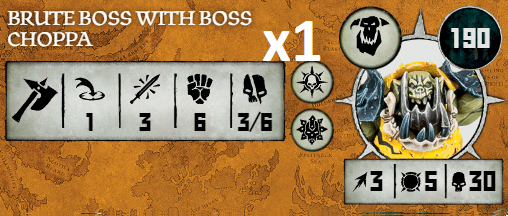
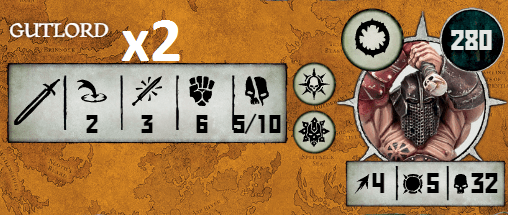
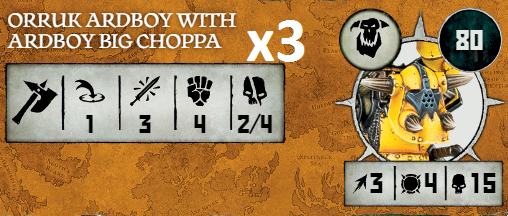
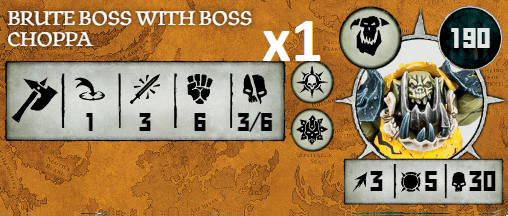
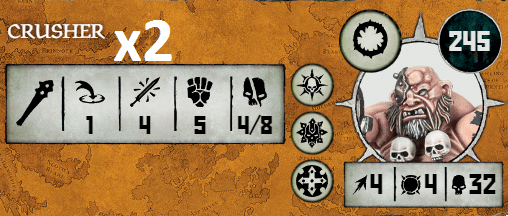

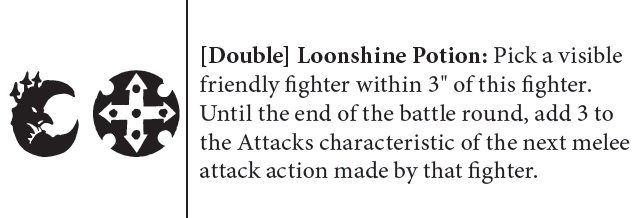
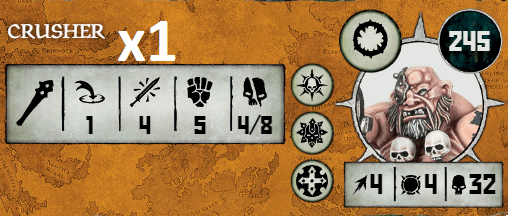
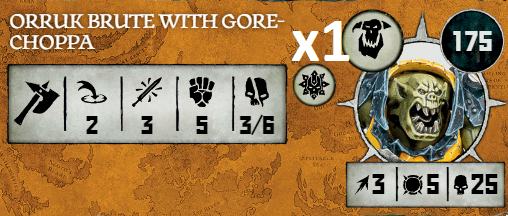
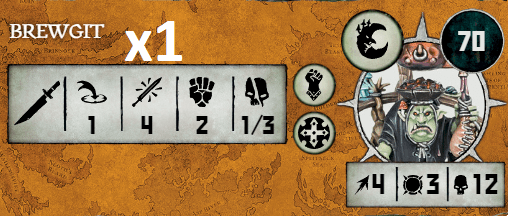


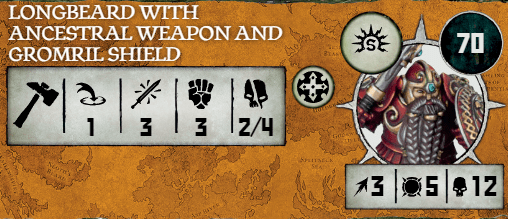








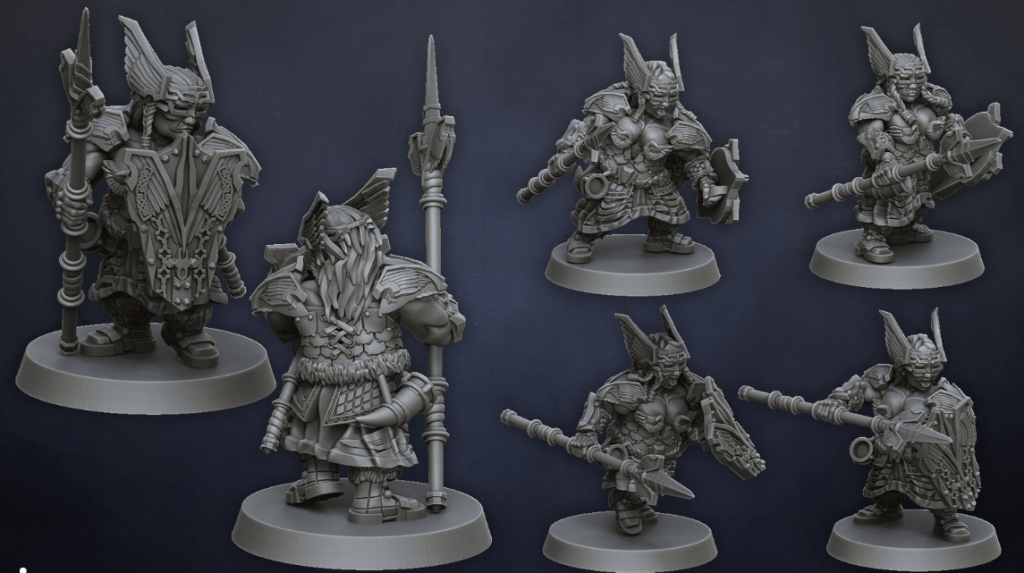
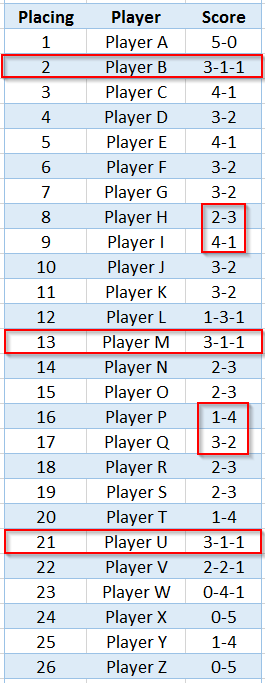
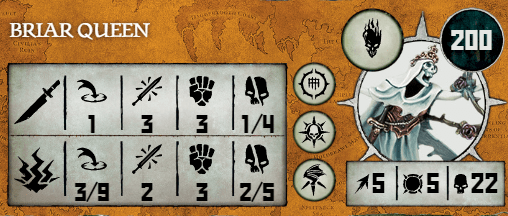


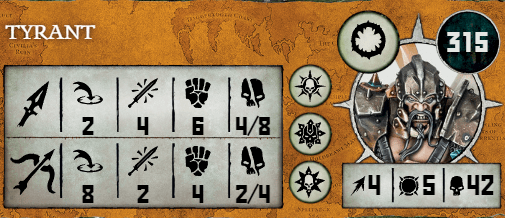
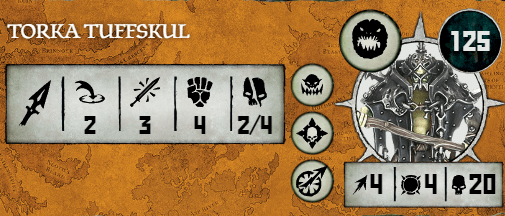

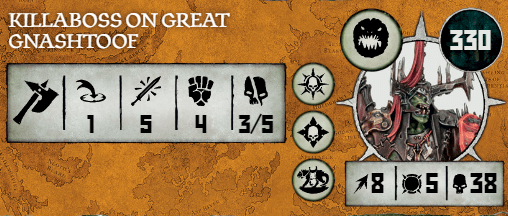


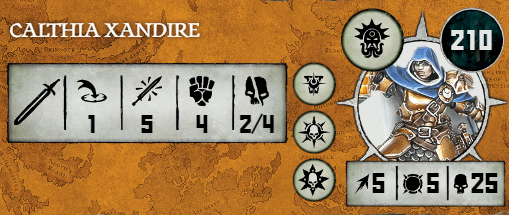

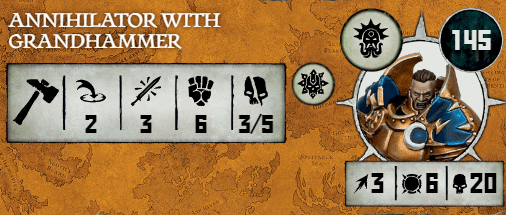


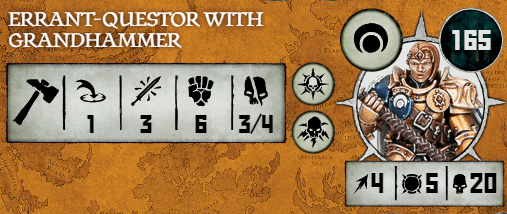

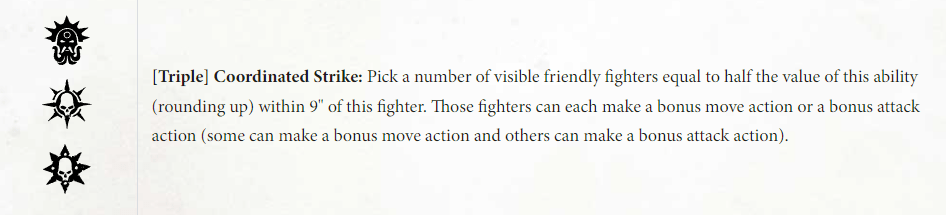



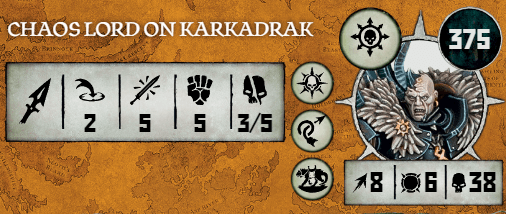


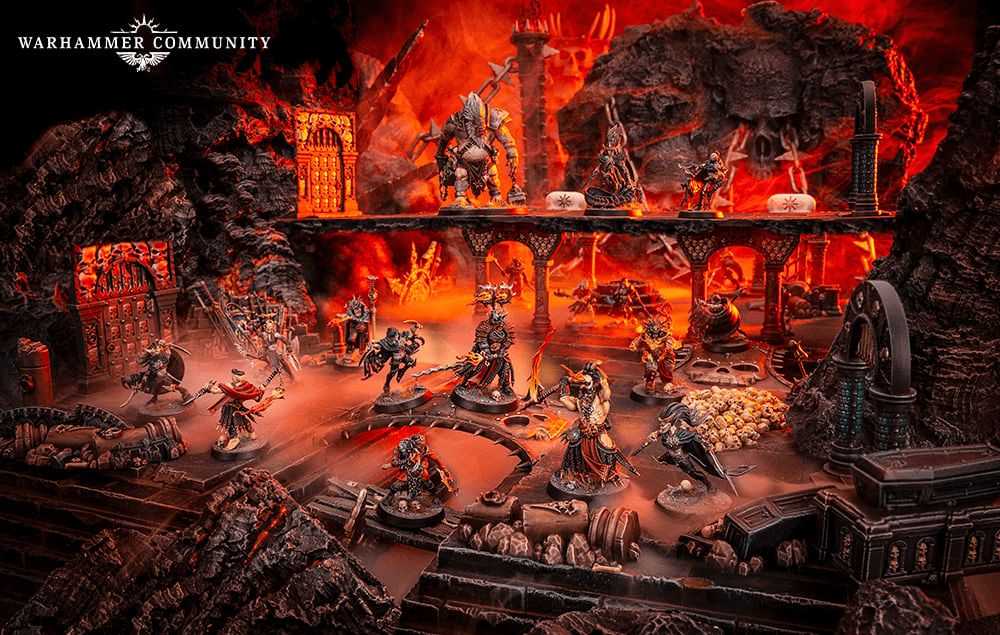


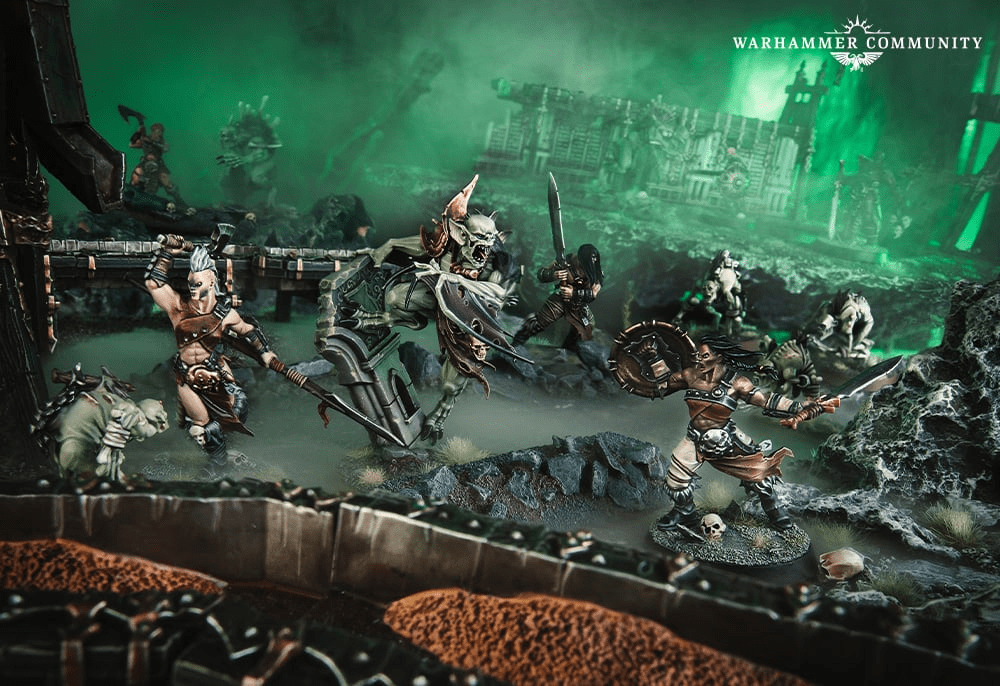


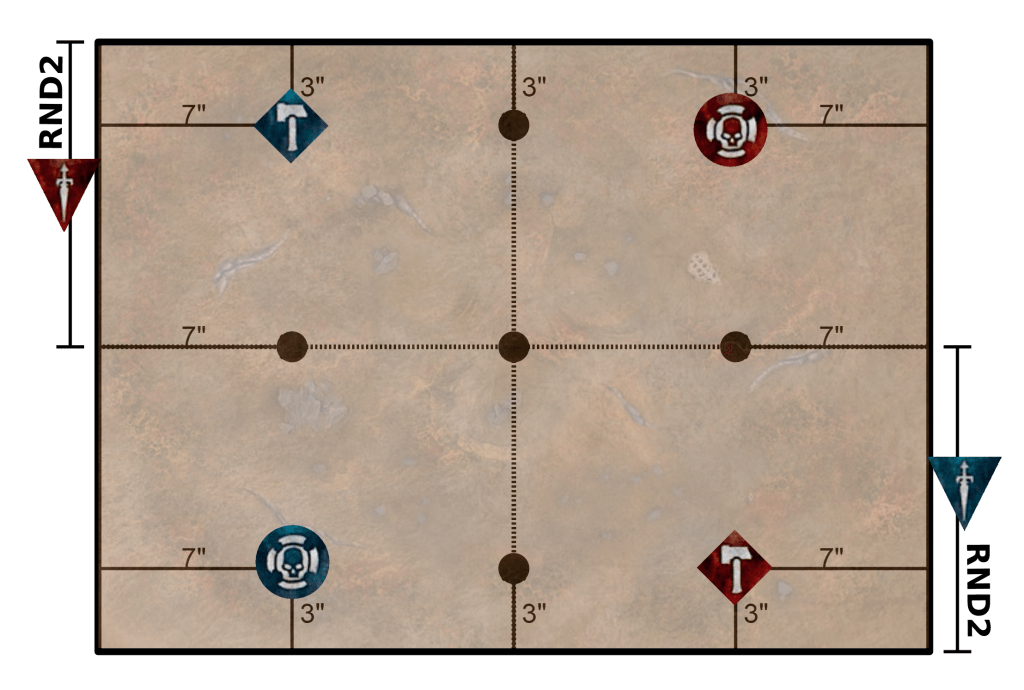
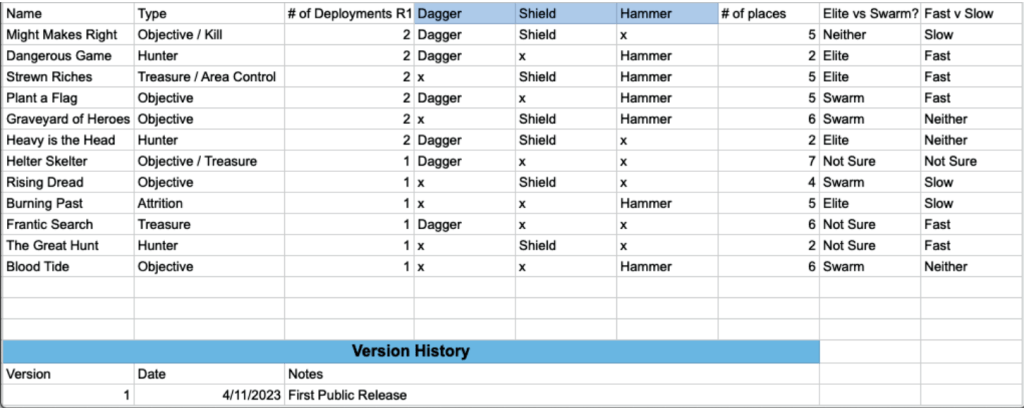



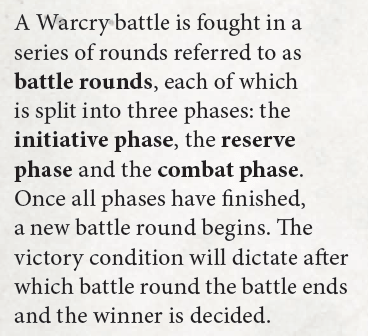
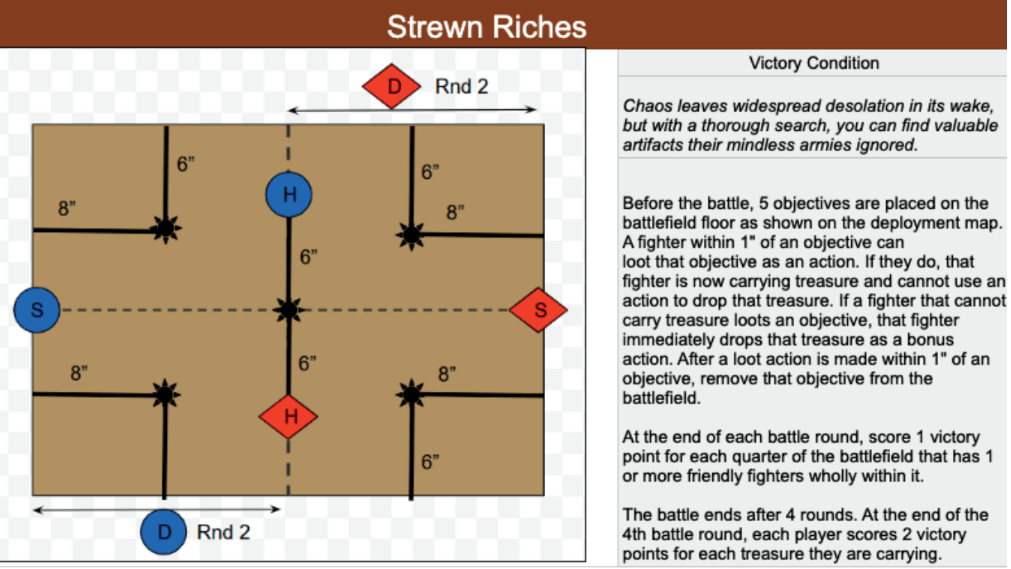

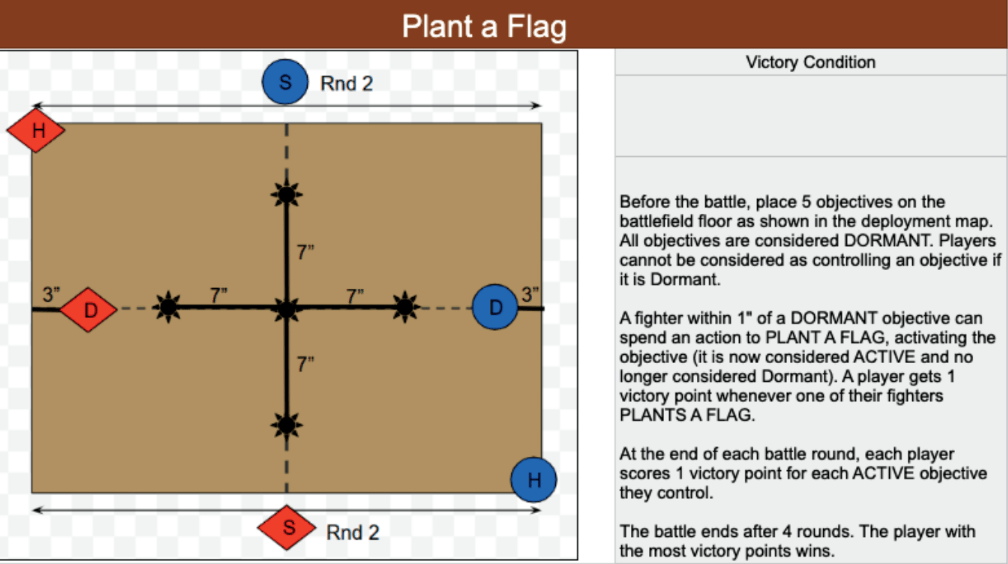


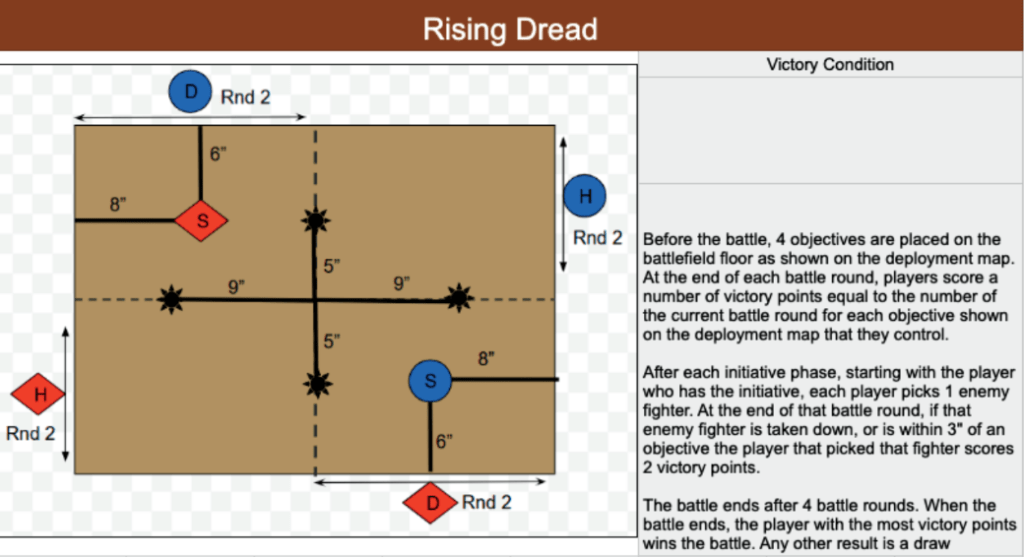

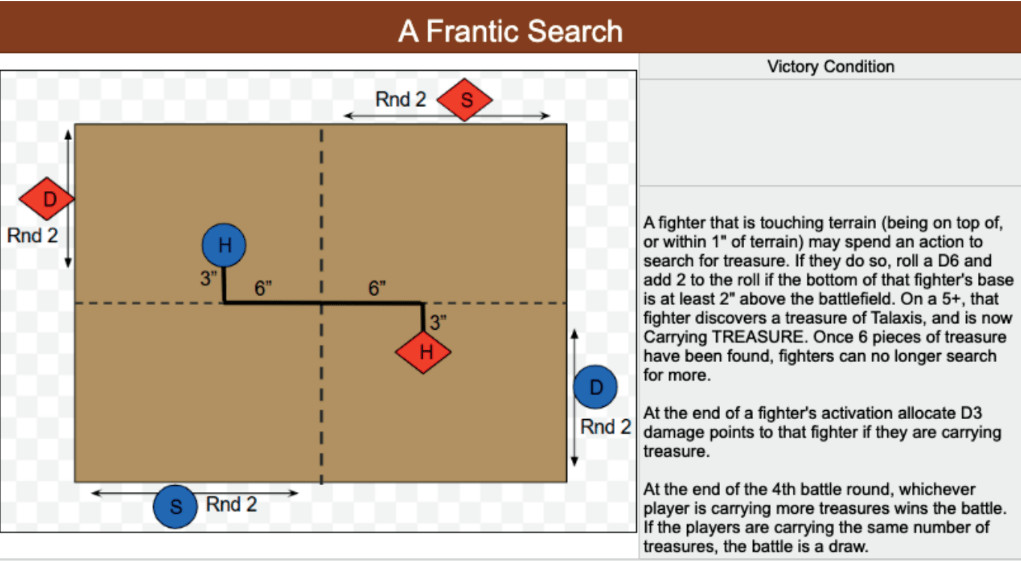
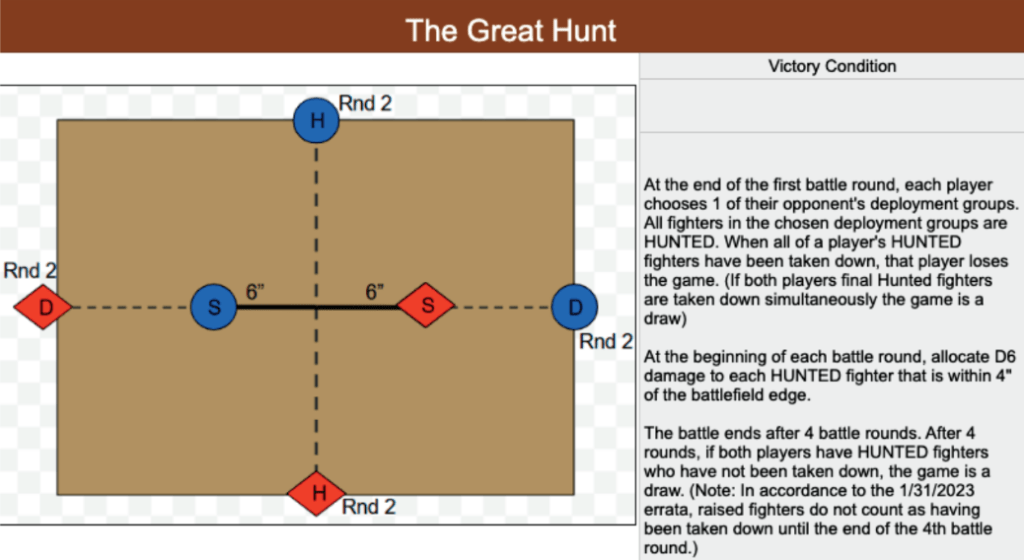


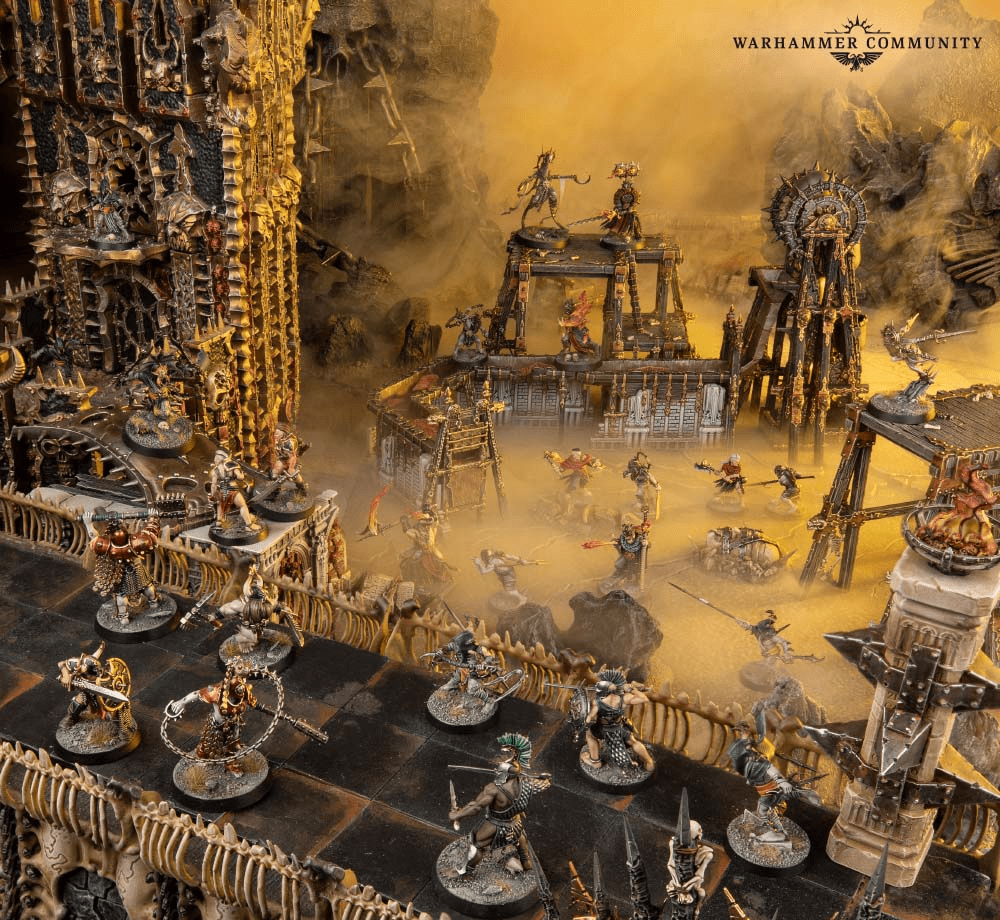



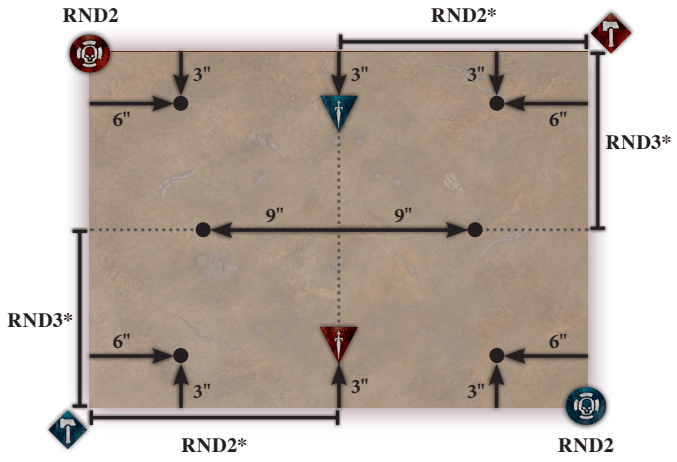
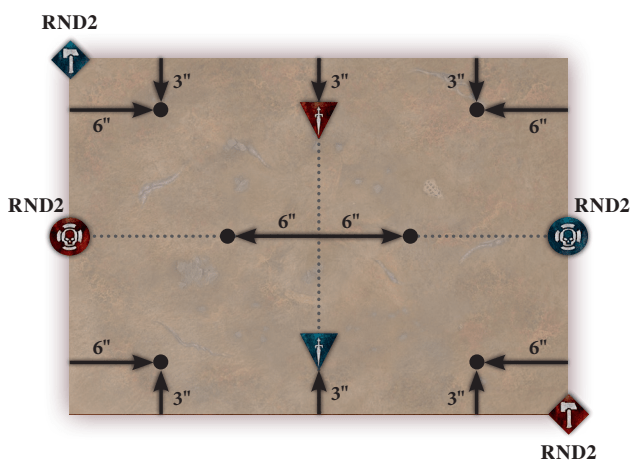


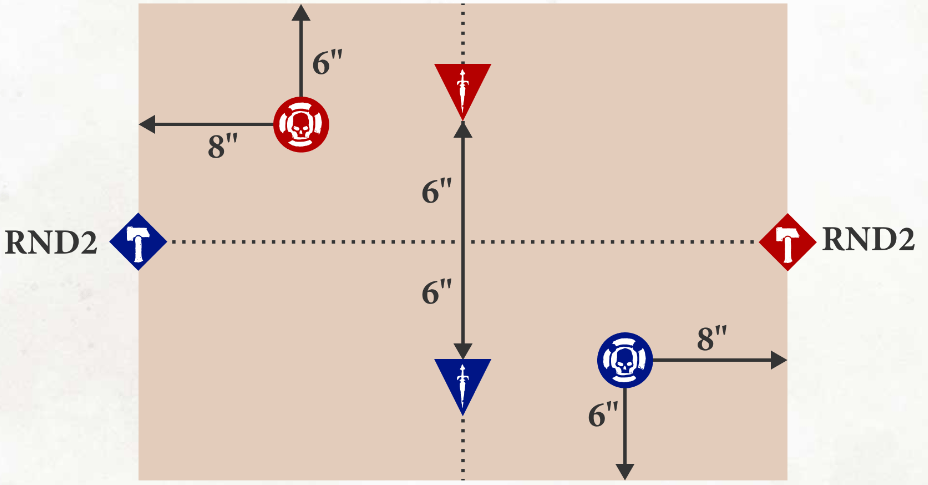


 Overthinking Warcry