Yes its my last post here. It was supposed to be mostly a goodbye post, but it looked quite depressing so instead I will do a usual article with a small goodbye at the end. I must admit that the title is misleading as by meta I basically mean something more like “high level/abstract view” than the usual collection of tournament winners and the context of why they are the best, but I couldn’t find a better title, so there it is.
The only 3 things that matter (the big three)
Most of the lists exist on a spectrum between two concepts: Agency (“proactivity”, mobility and reach/threat projection which all costs a lot of points) and Cost-Effectiveness (raw combat stats and numbers for as cheap as possible). The third important idea is basically the X factor, where you try to circumvent your opponent plans and expectations or counter/invalidate his plans and combos by having the list that “doesn’t play by regular rules”. It might not be clear, but simply looking at fighters and their roles you can imagine how adding such fighters will move the list across the axis I just described.
The greatest example of a fighter that greatly improves your agency is Varanguard. No matter how far on the map is your problem it can get there fast and solve it (assuming its not crazy big and isn’t climbing 😉 ). Suddenly your opponent rolled like crazy and you must win the treasure back or a wild Slann appeared and chaff on your objectives will get obliterated if you wont deal with it immediately – send mr V, he will deal with the problem (its basically mr Wolf from Pulp Fiction). Last but not least – agency means that you can negatively impact your opponent agency via nets, body blocking or other effects.

On the other side of the spectrum we have blessed Vexmore – big pile of undercosted combat stats that requires a lot of respect from much more expensive models. This category of fighters are assumed to win fights with everything at similar cost as soon as they are able to reach that fight (movement is an expensive stat and the most “cost-effective” fighters allocate their budget into more “fighty” stats).
If the category I just mentioned makes you feel like you came with a knife to a gun fight (Vex certainly does that to people), the last concept makes you feel like you came with a knife to a kayak race. Example situations that are results of your opponent focusing on this idea are the “typical” brawls around treasures not taking place (and making your titans useless) due to multiple teleports (backed up by wild dice blessing for initiative advantage) or simply having your fighters not count towards objective control due to You Messin’. I provided a fighter from Chaos that is an example for both previous concepts, so lets do it again here – Vashtiss and her double alters your opponent expectations about the combat and expected damage.
[Double] Discordant Disruption: Until the end of the battle round, subtract 1 from the Attacks characteristic (to a minimum of 1) of attack actions made by enemy fighters while they are within 6″ of this fighter.
I couldn’t find a good name for the third concept so lets simply call it X-factor and when talking about all 3 of them I think the fitting name would be “the big three”.

Listbuilding towards your strengths using “the big 3”
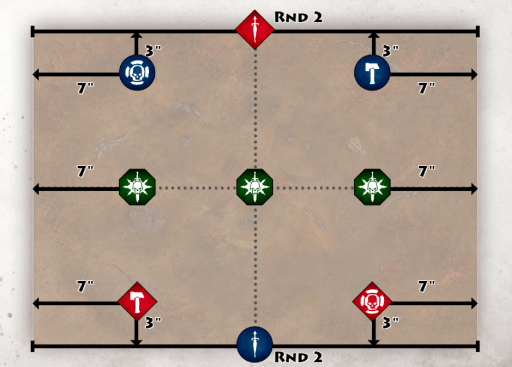
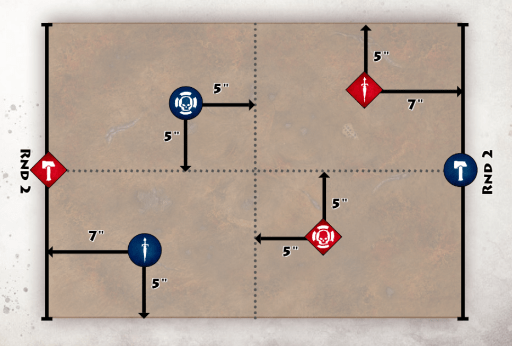
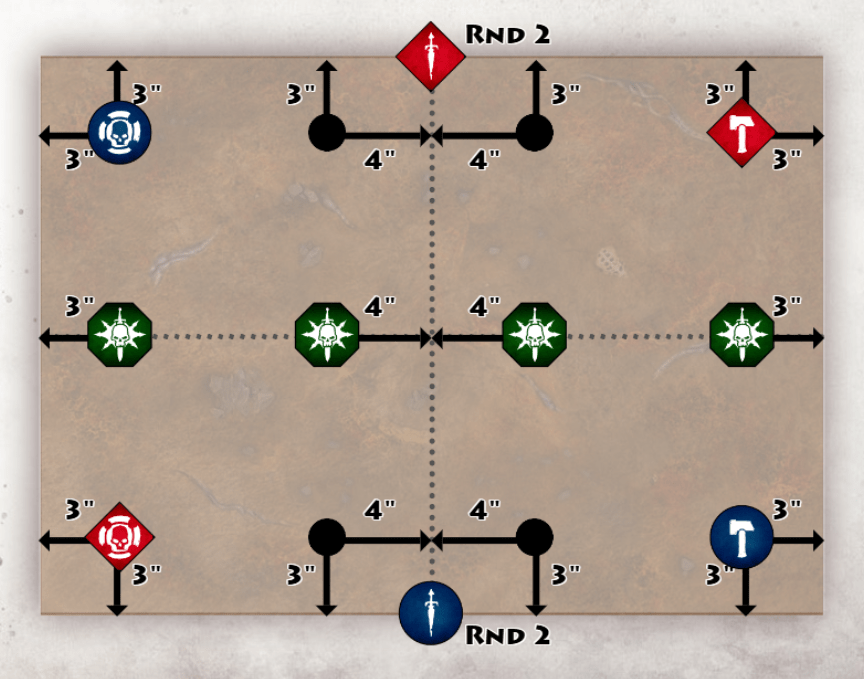
If you want to play quite skewed list, its a good idea to understand which game related skills are required. Obviously missions play a huge role in listbuilding and looking at it from “the big 3” perspective is not changing that, but I think its clear enough to not spend much time here (the more mobility is required the more “agency skewed” lists get advantage. In Rumble Pack “cost-effective” approach is best and in Ferocious Gnarlwood II its way worse). Lets get back to the topic. I will start with me – I’m not the best player, do unprovoked errors, play slowly and sometimes come to the right answer a bit too late (It took my 2 weeks to figure out the direction I should go for in a game I lost in Warkraj 2024). I’m also quite good at identifying strengths and weknesses of my opponent, I usually have a solid round 1 plan and I think I read(analyze) missions and meta well, so basically prep is my biggest strength. That’s why my preferred way of listbuilding is to go with “cost-effectivness” and severely underspending on “agency”. Long time readers probably noticed that the lists I publish in my articles are usually slow and numerous. It works for me well because I tend to predict how the game will go (prep is important in that) and if you know where to go with your slow fighters from the start – lack of mobility is way less of a problem (changing plans is tragic for slow warbands). This is a big strength, but it also makes your moves quite obvious and players that have a lot of proactive tools in their arsenal can use that against you (which is accurately reflected in my tournament results – I tend to go X-1 losing to a strong player with high agency list). Long story short – to play a list skewed towards “cost-effectivness” you should be good at prep, understand both lists well, be good at predicting optimal moves for both players and most of all – plan for future turns (strategy over tactics).

If you are a good player, but don’t want to prep or build a long term plans – then skewing towards agency will let you react to anything your opponent figured out or most importantly – dictate how the mission will play out by deciding where both players will have advantage. Skills required to master this kind of lists are: good understanding of matchups, tempo, target selection and ability to punish mistakes. I think that this kind of list has both the highest required skill floor and skill celling and its probably the reason that high agency lists are often a preferred list type of best players. I tend to undervalue agency in my tournament lists and often leave a single fighter with enormous task to save my gameplan in dire situations – I noticed that changing my lists more and more towards higher agency happened simultaneously with my overall skill/knowledge growth, so maybe I will end up thinking its simply the best approach in future, but currently I’m not there yet.
The third approach is similar to combo decks in card games and has the most rock/paper/scissors matchups of all 3. The main idea of “X-factor” lists is to avoid playing standard game and force your opponent into playing your game. The aspect of the game that will be altered will differ from list to list but it can be movement (RBF doing all their moves after you already finished your activations), attacks (Wildercorps only using ranged attacks), number dynamics (15 body lists, like OMM spider swarm) or even the general gameplay (hit and run tactics of Nighthaunt) and many more. In some way it could be also viewed as another flavor of agency, but I believe its distinct enough to deserve its own category. An example of adding more X-factor to your list would be to include teleporter for treasure missions or a Brute for objective tricks.
Practical application with examples
When you look at the list you are currently building it should be quite easy to identify how far did you go on all of the big three concepts. For example When building a Grave Guard spam you obviously lack some agency and adding something like blessed Wielder of the blade will give you a fighter that can relatively quickly respond or react to the changes in the game, while also serving the role of backup resurrector. Example list:
GG Spam:
Wight King (Cost effective, cheap hero tax in faction, also X-factor: resurrector)
8x Grave Guard (Cost effective)
Dire Wolf (Agency: mobility and body-blocking due to oval base)
Wielder Ally (Agency: mobile damge dealer and X-factor: secondary resurrector)
Such list has quite high numbers and knows that in objective missions less numerous opponents will have a difficult dilemma with lowering your numbers through GG fragility (which is deceptive because of reaction and risky due to high retaliation damage) or resurrection denial (we have a secondary resurrector to make it harder). High agency lists may have easier time killing your Wight King and here we come to example on how to defend your key combo against high agency list and the solution is pretty simple – redundancy. 2 Fighters are more than twice as hard to kill than a single one and you are working around not having your key fighters on the map first round.

For the opposite – defending against cost-effective fighters that will most likely win in fair fight the answer is pretty obvious – look for abilities that remove the “fair” from the fight. Against titans use nets and similar tricks and against getting outnumbered on objective try to add abilities like You Messin’ or Over My Dead Body (“pass on the body”) or try to go AoE damage route with Flamehurlers (that you can’t ally in at the moment, we will see if Chorfs will change that) or Warqueen Tanari.
Defending against the X-factor is tricky as low agency list may lack tools to deal with the problem and high agency list might lack the tools required against this particular list (for example Ogors against 15 body swarm).
Skewing towards only one of the big three might be a good idea if it fits your strengths, but most of the top meta lists focus on 2 or even all aspects of the big 3. The best example would be the x-bow spam in Wieldercorps (you can see I was writing it way before last FAQ, you can also put the new Necromancer lady in the SBGL list above). By ignoring the melee part of the game (they only use ranged attacks and can escape engage with reaction), and their opponent Toughness (they basically only critfish) they are quite far on the X-factor scale. Ability to focus fire on almost anyone on the map gives this list quite high agency. Not having to move to attack allows Trailblazers to use way more attack actions than regular fighters which makes them quite cost effective
Great way to diversify your list strengths is also adding teleport ability to your slow warband or equipping your elite list with horde clearing capabilities. Making sure you have plan B (and C) and investing in redundancy are also universally great ideas. Normally I would spent some more time on the topic (it’s a great way of showing cultural differences as US seems to go for agency more often than Europe and in Europe we seem to love cost effectiveness more, or maybe just skeletons), but as it’s also a goodbye article let’s move to the second part (I hope I demonstrated my idea in a clear enough fashion already).
The last goodbye (by Billy Boyd)
I’m happy I’m leaving the content creation adventure when the community is generally happy and excited with the game “officially” not being dead. I hope we will get some more support and bounce back to a state where playgroups that were shrinking for a while (like our local one in Wrocław) will start to grow again. Running OverthinkingWarcry gave me a lot of joy and satisfaction, but I decided that I can no longer dedicate the blog enough time (or basically anytime to be honest) for it to make any sense. I’m not quitting the game (can’t wait to finally play my chaos warriors), it’s simply a situation where life get in a way and forced me to dedicate almost all of my time to more important things (family, health and work).
I started writing articles with two goals in mind – I was spending way too much time thinking about the game (sometimes it seems that the word obsession works better than hobby in my case) and decided to write it down so I can bounce my ideas from others and learn some new skills on the way benefitting the community as a result of that. My main reason was to provoke some deeper discussion as 99% of all the online discourse is very surface level and quite often incorrect and basically always about the listbuilding or general powerlevel/meta. I hoped to inspire some discussions about tactics, strategy, activation sequence, tempo, battlepack interpretation and similar topics. I tried to invent vocabulary necessary for such discussions (for example local activation advantage) or standardize already existing phrases. I failed miserably (at least in spaces that I follow) and this is actually the reason that I consider my efforts a big failure as this was my number one goal. One think I hope the community to reconsider is the general approach to disagreement. When I challenged certain opinions or pointed out things I consider incorrect it was often viewed as unprovoked negativity or an attack and was ignored or was faced with people defending themselves instead of their opinion. I am aware that my direct and blunt language (regular readers know that English isn’t my biggest strength) played a part in that, but I think the biggest problem is the notion of “I will say positive stuff or nothing at all” that prevented people from joining or even starting discussions. I hope at least some of the readers will be more open to disagreements over game related tactics or strategy as this is the fastest way to learn and a great way for the community to move forward.

Since the first article here that was posted over 2,5 years ago the blog was viewed 75 243 times by 27 805 visitors (this doesn’t include people opening the battlepack PDFs hosted on the blog). I published 77 articles and list miniguides and tried to mostly create original content instead of going for low hanging fruits of commenting latest GW releases or writing “in depth faction guides” that only separate good profiles and abilities from the bad ones. This way I managed to get a total of 0$ from Patreon (its already closed). I played 7 local events and traveled to 3 Warkrajs (shoutout to great TO team, they are the biggest heroes of Polish community) and managed to never have a negative W/L with a combined result of 24-9-2. I did very well locally and only ever lost to one local player (shoutout to Andrzej, my local Nemesis) and only missed a podium once (fuck zombie dragons). I’m happy that my battlepacks (and my content in general) received very positive feedback and I’m sure that the most valuable opinions and feedback I could get didn’t reach me due to “say only positive stuff” attitude. I feel obligated to my readers to point them towards other content creators as I will no longer provide any content and the three content creators that I want to recommend are theSaltySea (that actually inspired the whole blog when he gave my list a shoutout in one of his videos), OptimalGameState (noone in our hobby can get even close to his quality level) and Hobby Jackal (I love your content, I wish your videos would get released more often this days). Special thanks to Magnus for a lot of trust and endless conversations and Andrzej for keeping me humble and being TO.
It was a great journey, if you found the blog recently, here are some of the older articles you mind find interesting/helpful:
- Activation War: Tempo, activation advantage and sequencing
- Overthinking Tactics: Treasure missions
- How to get better at Warcry faster in 3 simple steps
- Listbuilding to counter the meta
- Warcry Dictionary
If you want to disagree with some of the points from my articles above or just say something about the blog, then you are more than welcomed to the Goodbye Party thread in Warcry-creator-content-links channel of Warcry discord (#OneDiscord), but commenting in other places is fine too. The domain is paid for the next 7 months, so if you like my battlepacks I suggest to download them before it dies. Have a great week, thank you and bye.







 Overthinking Warcry